Development of resistant and reliable USV and UUV drones, made from composite materials — fibreglass and carbon fibre — capable of operating in any adverse weather conditions — rain, wind, cold — unlike most aerial UAV drones, which cannot be used in such conditions.
Company overview
Maritime
Drone Innovation
The first Romanian company manufacturing maritime and riverine drones USV and UUV, based on innovation and expertise in hardware engineering, the military field, and 40 years of experience in naval model construction.
Through numerous research and development projects, we aim to become one of the most important maritime drone manufacturing companies in the European Union — an industry that is currently underrepresented — achieving very high production capacity and delivering modular multi-role maritime drones at minimal cost, powered by solar and wind energy, capable of executing missions 24/7 with a 100% success rate.
OBJECTIVES
Our policy is to maximize mission effectiveness, as we innovate, design and build maritime drones for defensive purposes, to carry out defence missions especially along the border line.
The company focuses on hardware engineering, unlike the many software companies that have entered drone production without the necessary construction experience, using untested software, which has led to numerous failures.
Achieving the maximum possible result using minimum resources, through the optimization and automation of the entire production cycle.
Attracting the best specialists in IT, modelism, robotics, as well as strategic investors, with a view to fulfilling the company mission.
The integration of AI in maritime drones, ensures functionality and efficiency in fulfilling individual missions and in interconnected networks, through a real-time information flow.
About us
Romanian innovation in maritime and riverine drones, from research to production.
Starting in 2023, we began research and development of maritime drones, being among the first companies in the world to adapt to the new requirements of the defence industry, anticipating the importance of drones in new modern warfare strategies, redefining how military operations are conducted, all in the context of the conflict in Ukraine.
USV and UUV drones are characterised by modularity, multifunctionality, energy autonomy through solar and wind energy, and dual use in both military and civilian industries. They have multiple capabilities to execute 24/7 military reconnaissance, surveillance and control missions — including the detection, interception and destruction of enemy maritime, aerial and underwater drones; identification, transport and neutralisation of naval mines; maritime, aerial and underwater search and rescue; security; inspection; transport (medicines, medical samples, blood for transfusions, spare parts, documents); and environmental missions.
We have developed and patented the project “Integrated Autonomous System of Interconnected Drone Networks for Securing the Maritime and Riverine Border”, encompassing maritime and sailing drones through which a “drone wall” can be built — a complex network of surveillance drones, sensors, satellite links and anti-drone systems — on NATO’s eastern flank along the 31.7 km maritime and 343.9 km riverine border with Ukraine, covering the Constanta port area, the Neptune Deep project platform, the Danube Delta and the Danube river, as requested by European Commission President Ursula von der Leyen, in line with the “Eastern Sentinel” operation launched by NATO Secretary General Mark Rutte.
During the audience of 15.09.2025 at the Ministry of National Defence headquarters, we proposed to the Minister of Defence that the MoND take over the presented projects — including completed and tested prototypes — within a classified research, development, testing, certification and manufacturing programme for maritime drones, funded through the European SAFE programme, within Romanian armament factories where MoND is the majority shareholder and primary beneficiary.
We also requested the establishment of a specialised drone unit within the Romanian army, drawing on current and future specialists in modelling, robotics, mathematics and IT — fields in which Romanian competitors win gold medals at world-class competitions every year.
This programme would be a direct response to the emergence in summer 2024 of a new Russian unit — the “Rubicon Centre for Advanced Unmanned Systems” — which develops drones, tests tactics and trains operators with unlimited resources, commanded by 37-year-old Colonel Serghei Budnikov, a former artillery and marine infantry officer. On 28.08.2025, this unit destroyed the Ukrainian reconnaissance vessel Simferopol near the Danube Delta on the Chilia branch, in the first Russian naval drone attack via the Bastroe channel. Had the presented maritime drone system been escorting the Ukrainian vessel, the attack could have been prevented and the enemy naval drone intercepted and destroyed at minimal cost.
Furthermore, had the drone system been integrated a year earlier, on 29.05.2026 the Russian Geran 2 drone would have been identified, intercepted and destroyed exactly on the border line, before it covered a 4-minute flight path to the centre of Galati, thereby preventing the destruction of the upper floors of a residential building and the injury of two people. On 05.06.2026, when a Ukrainian maritime drone entered the port of Constanța and travelled undetected for 7 km before detonating and causing significant material damage, it could have been intercepted and destroyed.
The drone system, with its wide range of capabilities, can also be deployed in the Strait of Hormuz to escort civilian and military vessels, as well as for the identification, transport and neutralisation of naval mines.
This strategy is also endorsed by Gen. Ben Hodges, former Commanding General of the United States Army Europe, who warned: “It has been years since I have been encouraging my friends in the Romanian Navy to invest in maritime drones, a much faster and cheaper alternative than warships”, citing the extraordinary results achieved by Ukraine.
1 / 3
Pioneers
The first Romanian company manufacturing maritime USV and UUV drones, with 3 innovations registered with the State Office for Inventions and Trademarks, with patent applications published in the Official Industrial Property Gazette.
Own capacity
Research, innovation, design, patenting, testing and production carried out entirely with own resources, following competitive standards and advanced strategic management.
Visionaries
Since 2023, among the first companies worldwide to adapt to new defense requirements, anticipating the role of drones in modern warfare in the context of the Ukraine conflict.
Institutional recognition
Inventions presented to the Ministry of National Defence, General Directorate for Armaments, the Research and Innovation Centre for the Naval Forces and Romtehnica, who confirmed the uniqueness of the projects and the need to equip the army with maritime drones.
Patent application
Invention registered with OSIM under patent application no. A/00248 of 16.06.2025, published in the Official Industrial Property Gazette – Inventions Section No. 11 of 28 November 2025.
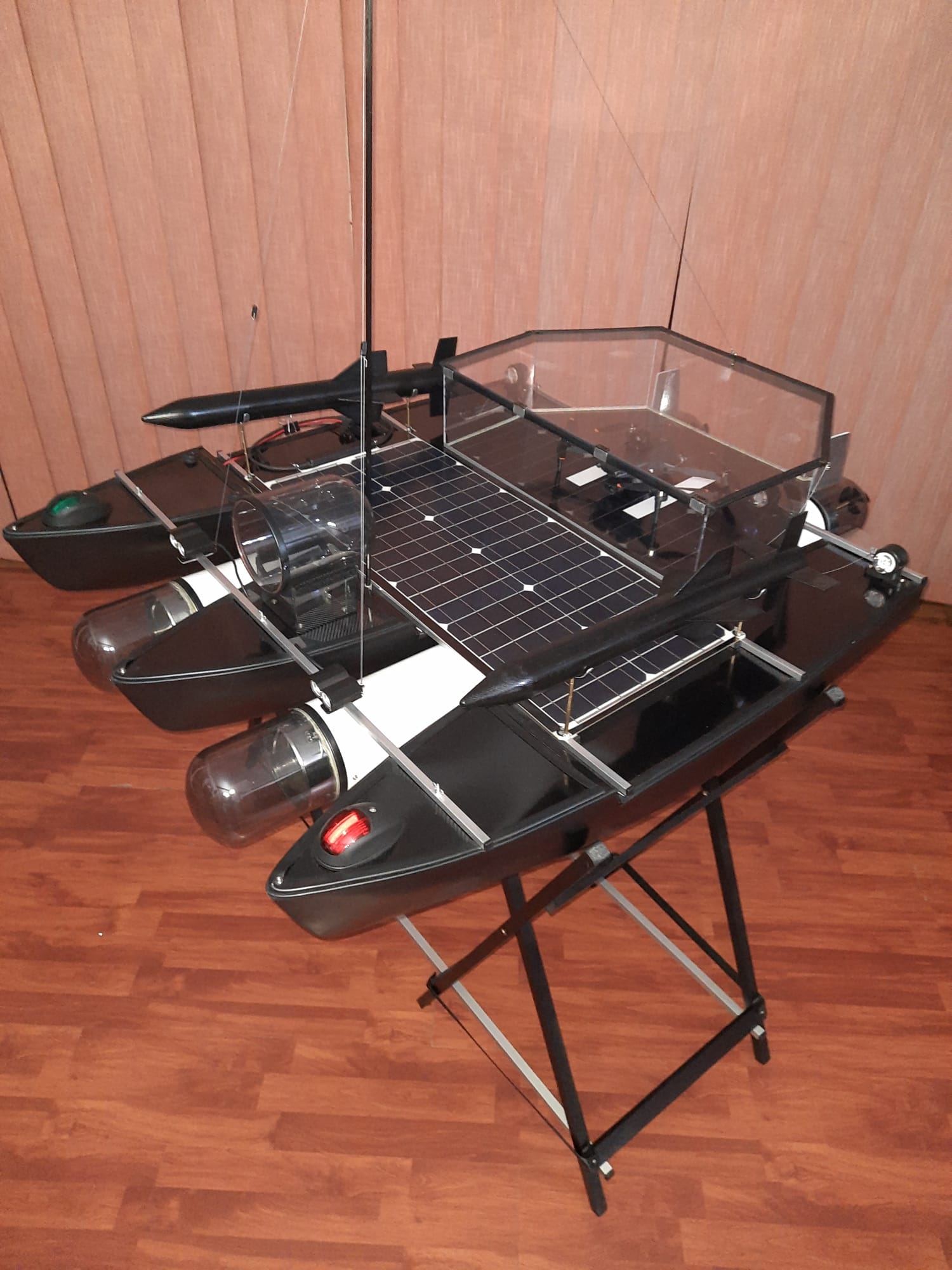
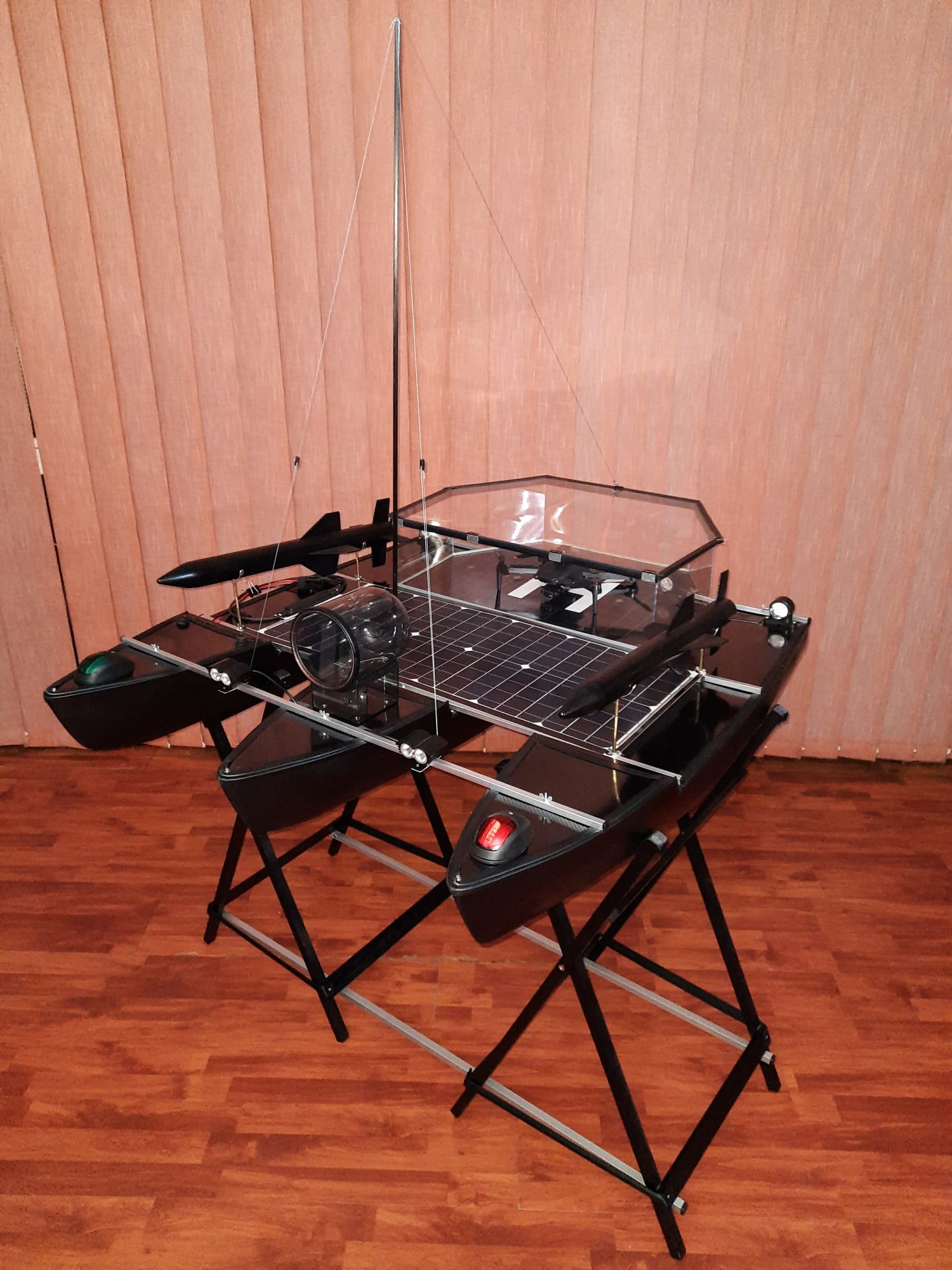
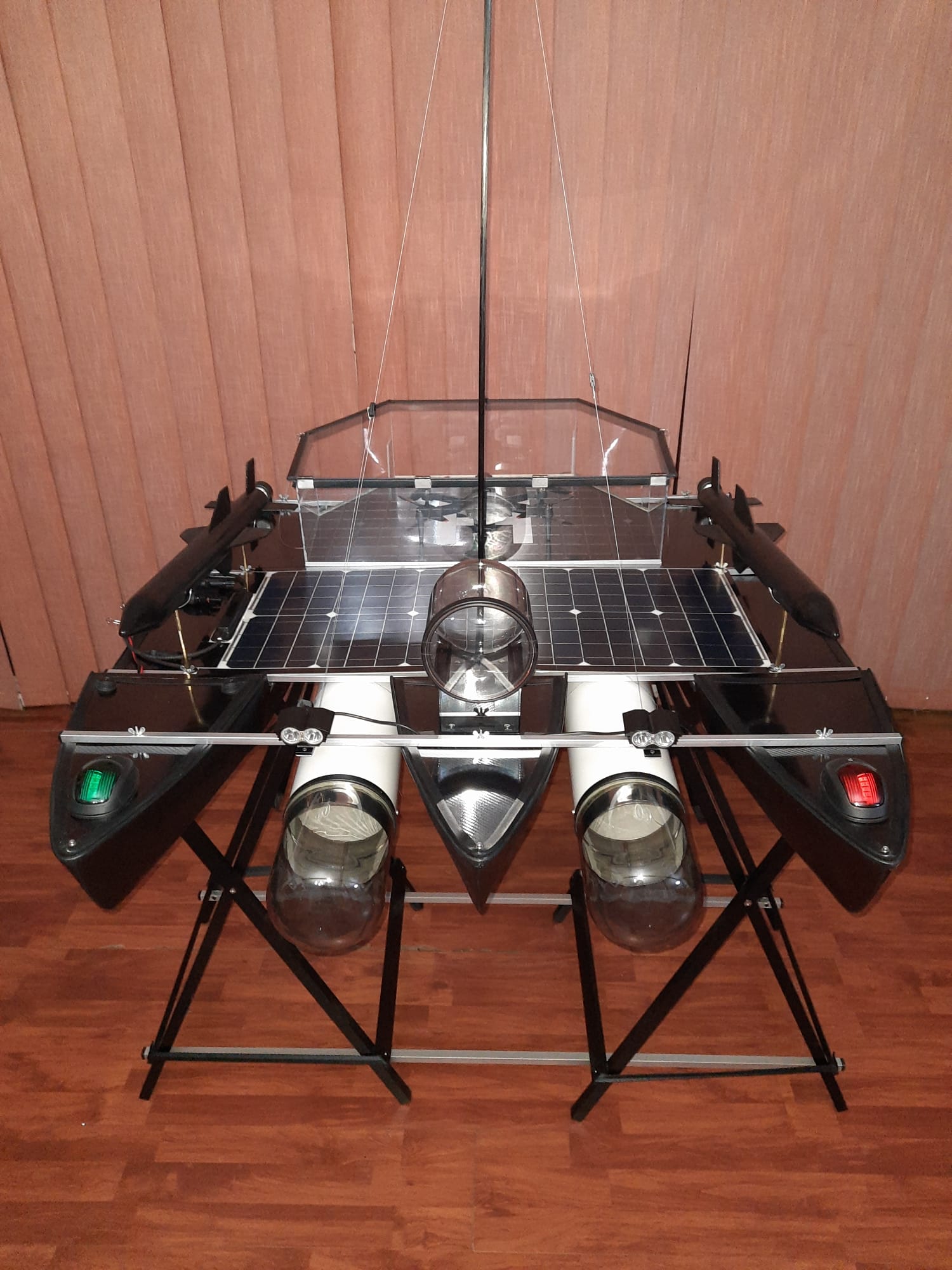
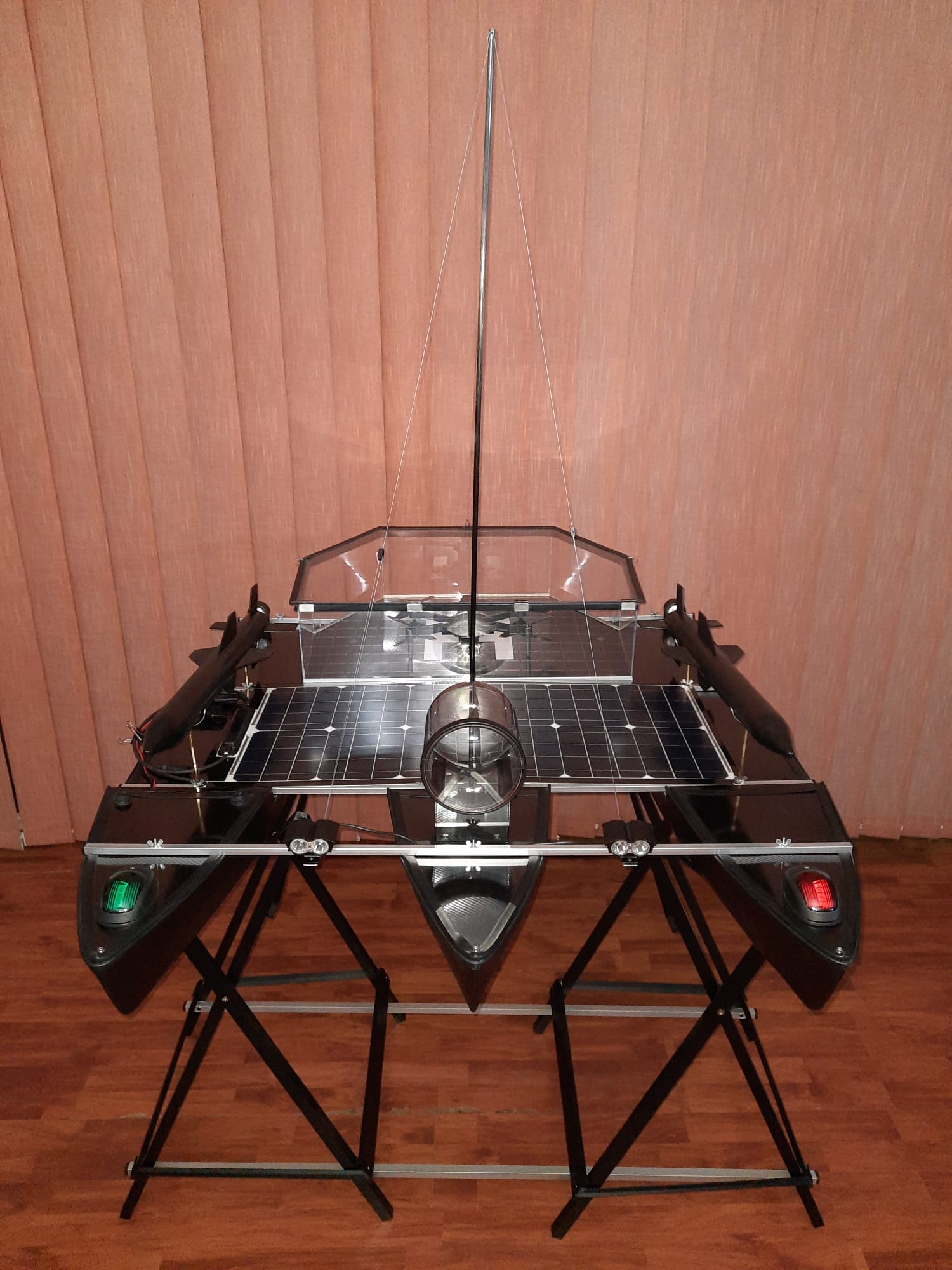
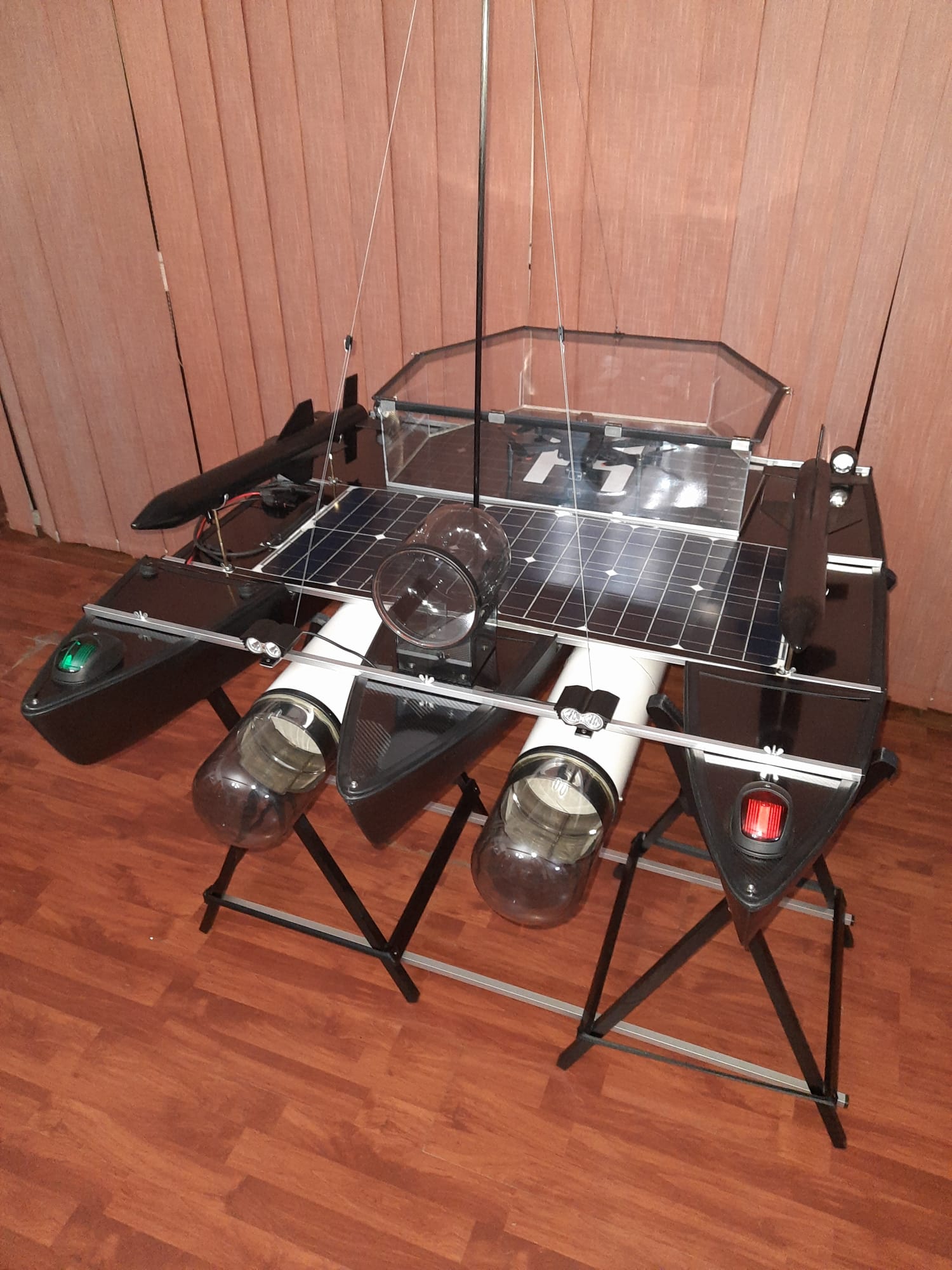
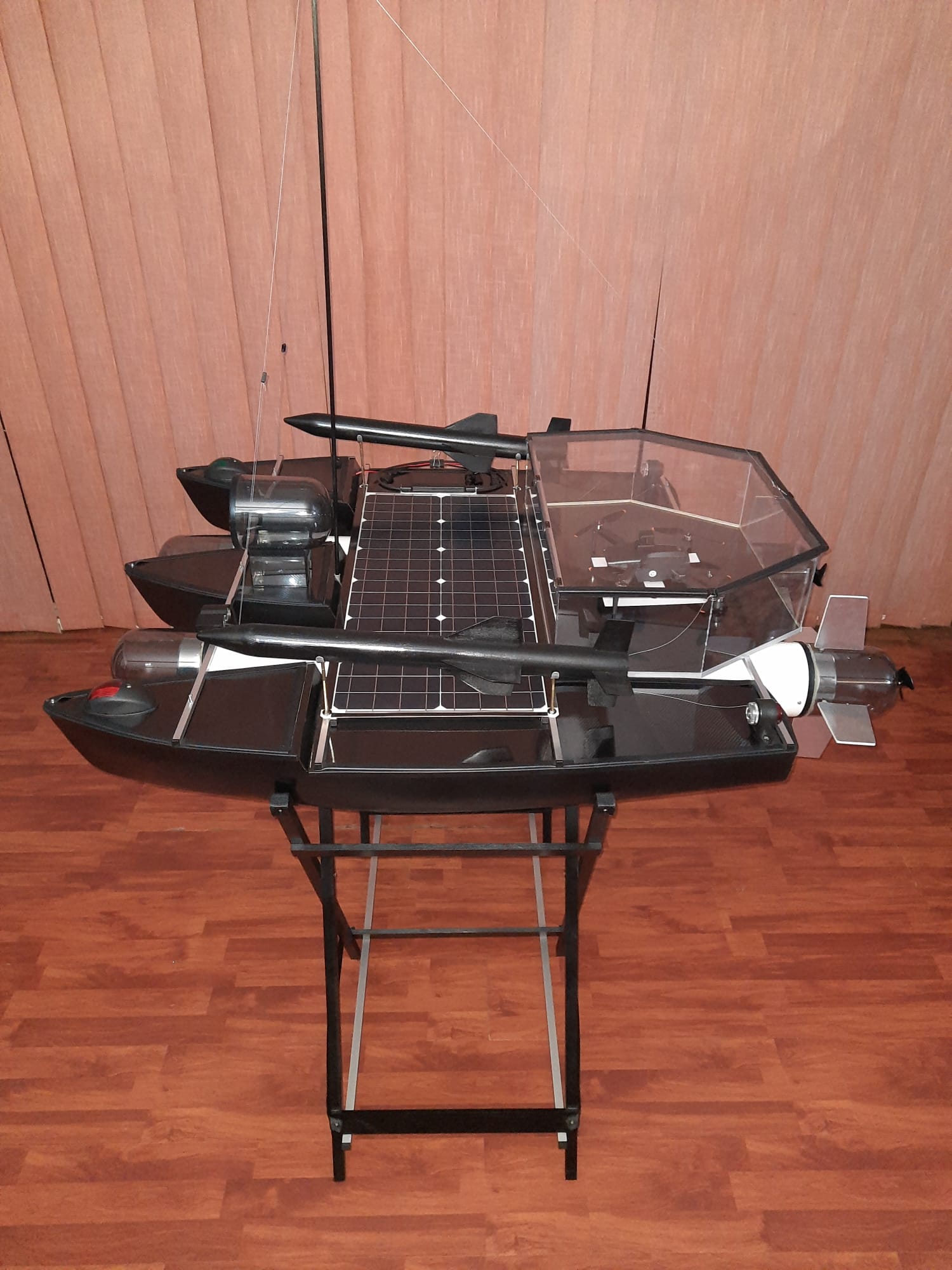
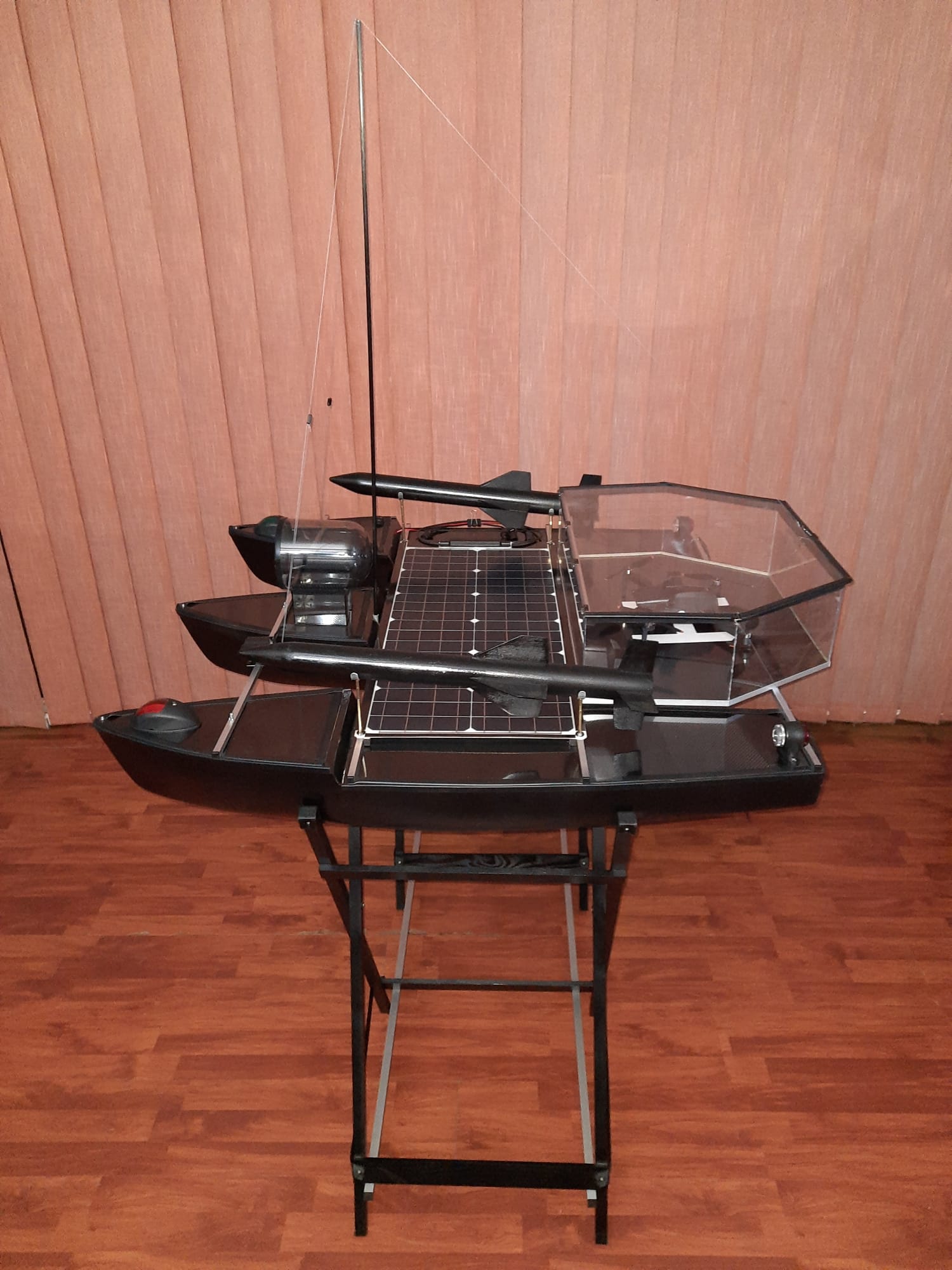
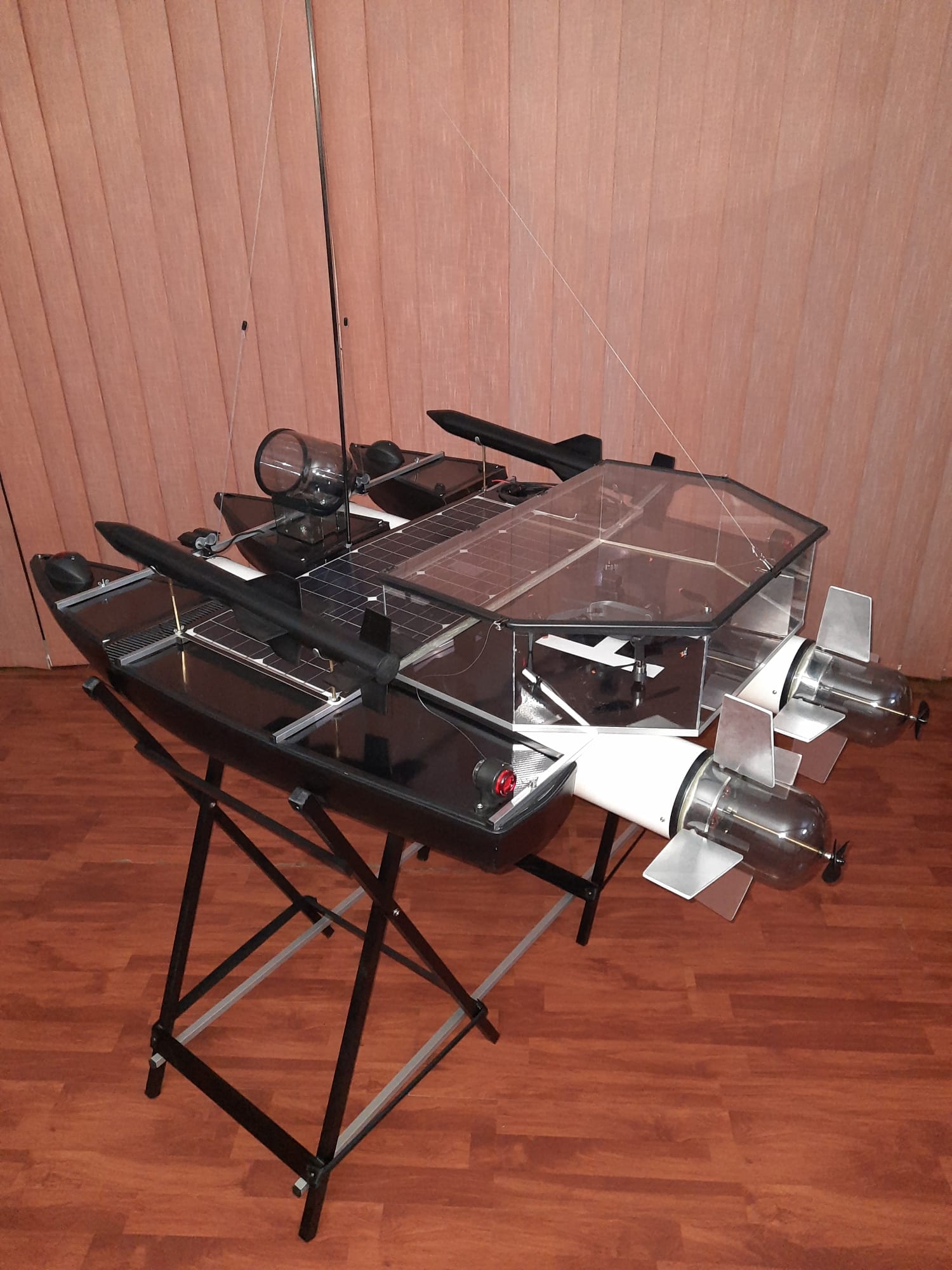
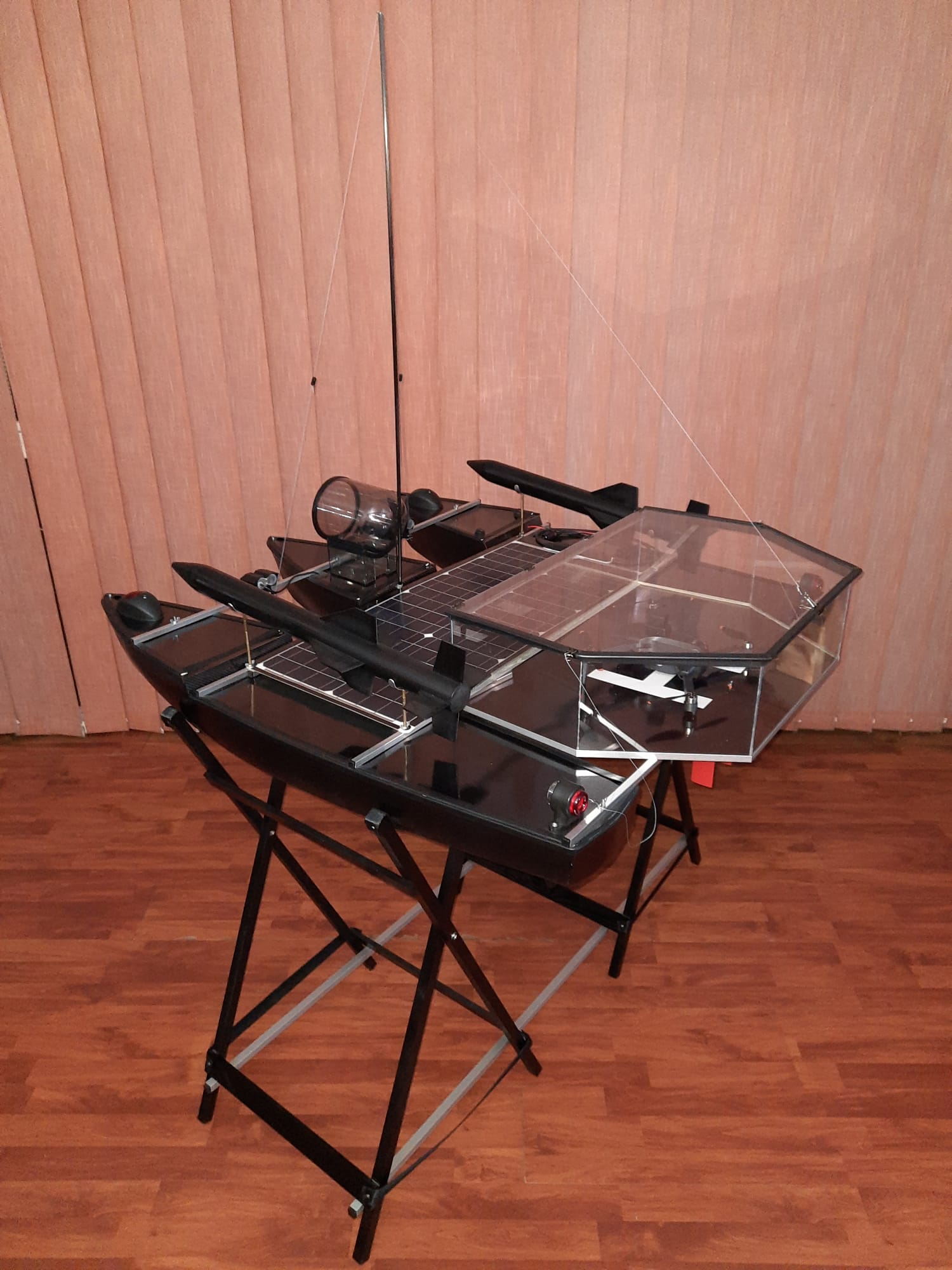
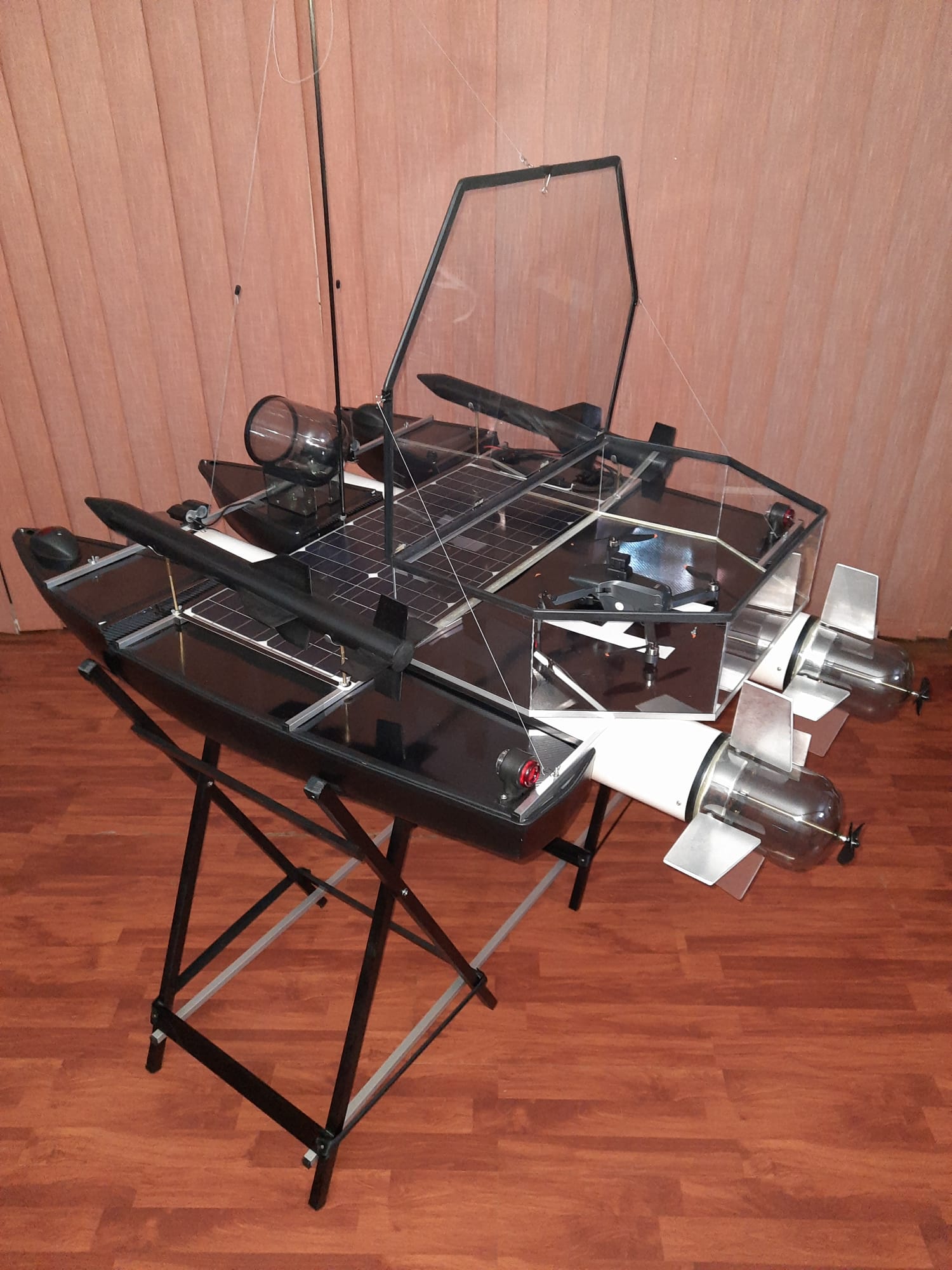
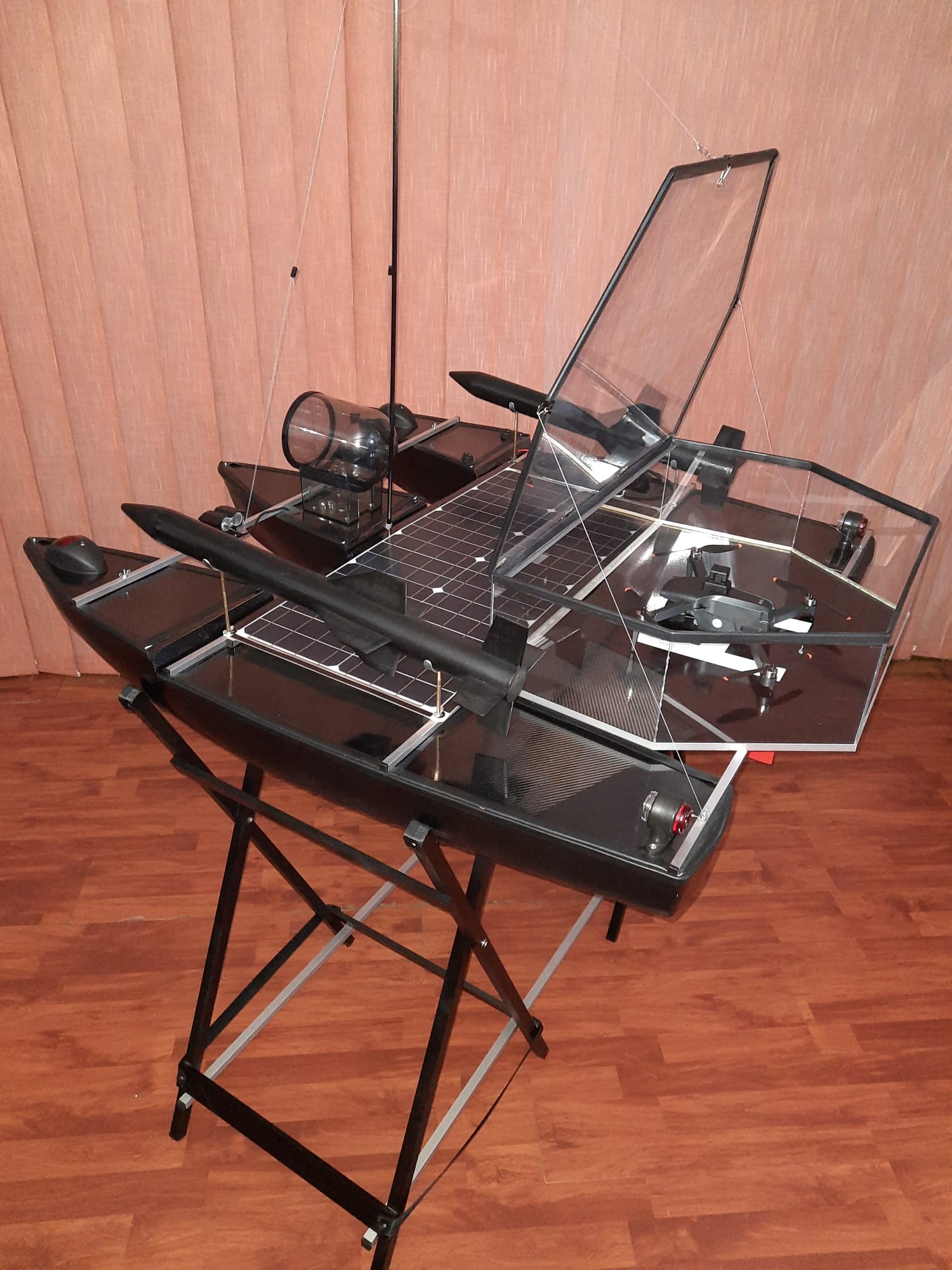
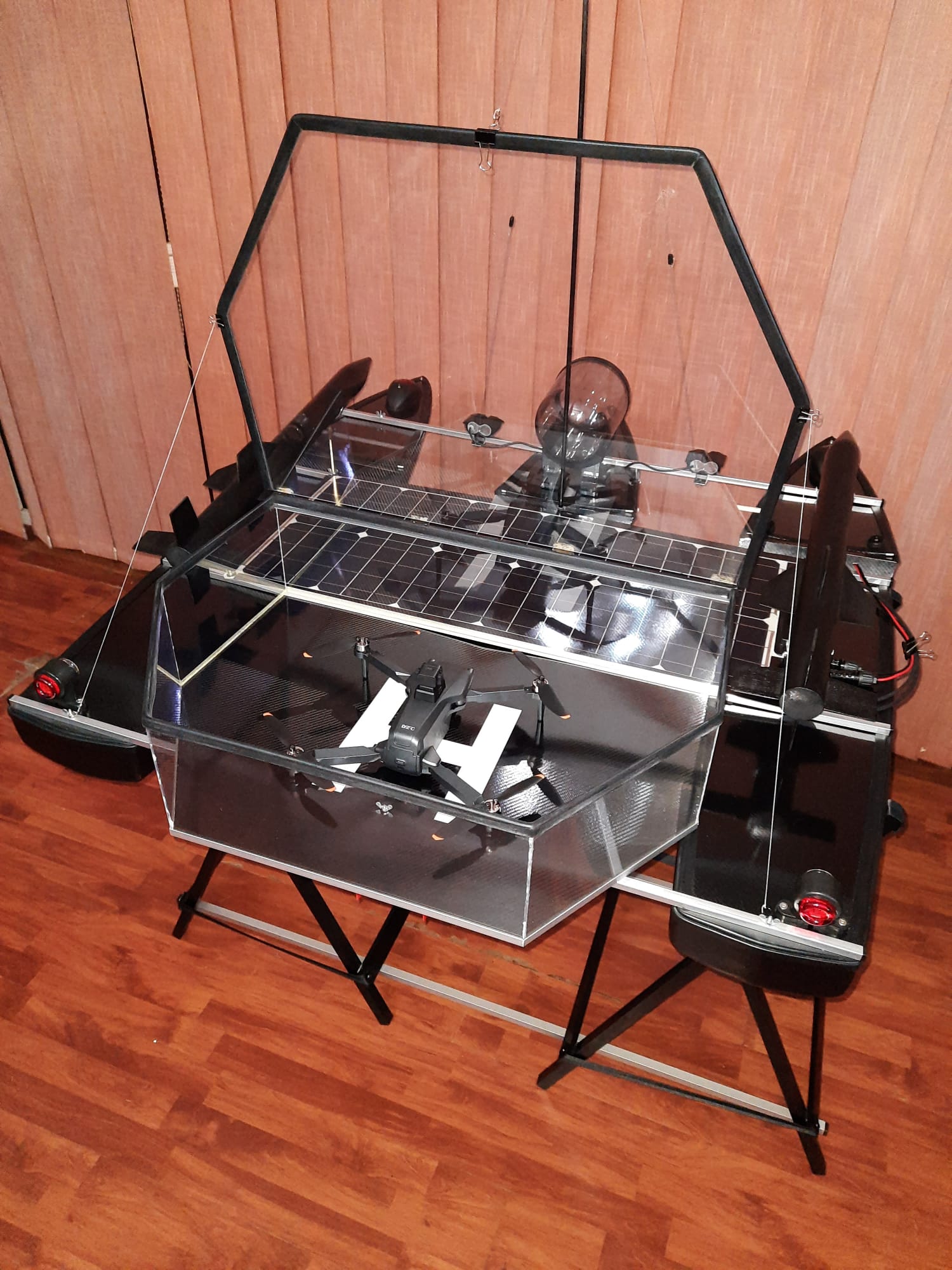
Modular Photovoltaic Maritime Drone Carrying Aerial Drones, Anti-Drone Rockets and Underwater Drones
A multifunctional USV trimaran drone designed for 24/7 reconnaissance, surveillance and control operations, day and night, with infrared and thermal camera, streaming 4K images in real time, as well as data collected by active and passive sonar, sensors and microphones, processed by AI to detect movement of vessels, aircraft and drones, simultaneously covering the marine, aerial and underwater environment. Dual applications in military missions for intercepting and destroying enemy maritime, aerial and underwater drones, neutralising naval mines, and in civilian missions for search and rescue, inspection, transport and environment.
FEATURES
- Silent, fast and radar-invisible, assemblable in minutes by one person, suitable for special forces in port waters, rivers, streams and lakes
- Carries UAV aerial drones on a runway fitted with a hatch, greatly extending their range, used only when aerial observation is required or for kamikaze attacks with explosive payload
- Carries underwater drones fitted with decoupling servomechanisms between the trimaran hulls, controlled remotely by satellite to the maritime drone and underwater by fibre optic
- Two anti-drone rockets mounted on the lateral hulls, and can be equipped with two automatic weapons
- By identifying and marking the target from water level and aerially, it can independently destroy the target or transmit the location to the Command Centre
- Maintains fixed GPS position regardless of currents, wind or waves, through the independent operation of the 4 electric motors
- Dimensions 1.2 x 1 m (1.4 m with UUV drones mounted), speed 60 km/h, range 80 km, own weight 15 kg, payload capacity 15–20 kg explosive charge for kamikaze missions
- The enlarged 5 x 4 m variant has even more capabilities, with a payload capacity of 500 kg, 10 aerial drones, 4 torpedo underwater drones, 6 anti-drone rockets and two automatic weapons; it can be used as a platform for crossing rivers with equipment or weaponry; fully demountable, a simple truck without a trailer is sufficient to transport multiple drones
- The central hull can be used separately and the lateral hulls attached via crossbeams, thus forming two drones that can be deployed in two different directions
- Four drones can be connected via crossbeams to form a self-propelled remote-controlled floating platform for ferrying equipment across rivers, or, by fitting an electric water pump, to operate as a firefighting vessel
- In the unarmed variant it can be used by the Border Police and Coast Guard to combat illegal border crossings and drug and human trafficking
- Inside the hulls and by adding two containers, medicines, medical tests, blood for transfusions, documents and spare parts can be transported
Patent application
Invention registered with OSIM under patent application no. A/00076 of 16.02.2026, to be published in the Official Industrial Property Gazette – Inventions Section No. 8 of 28 August 2026.
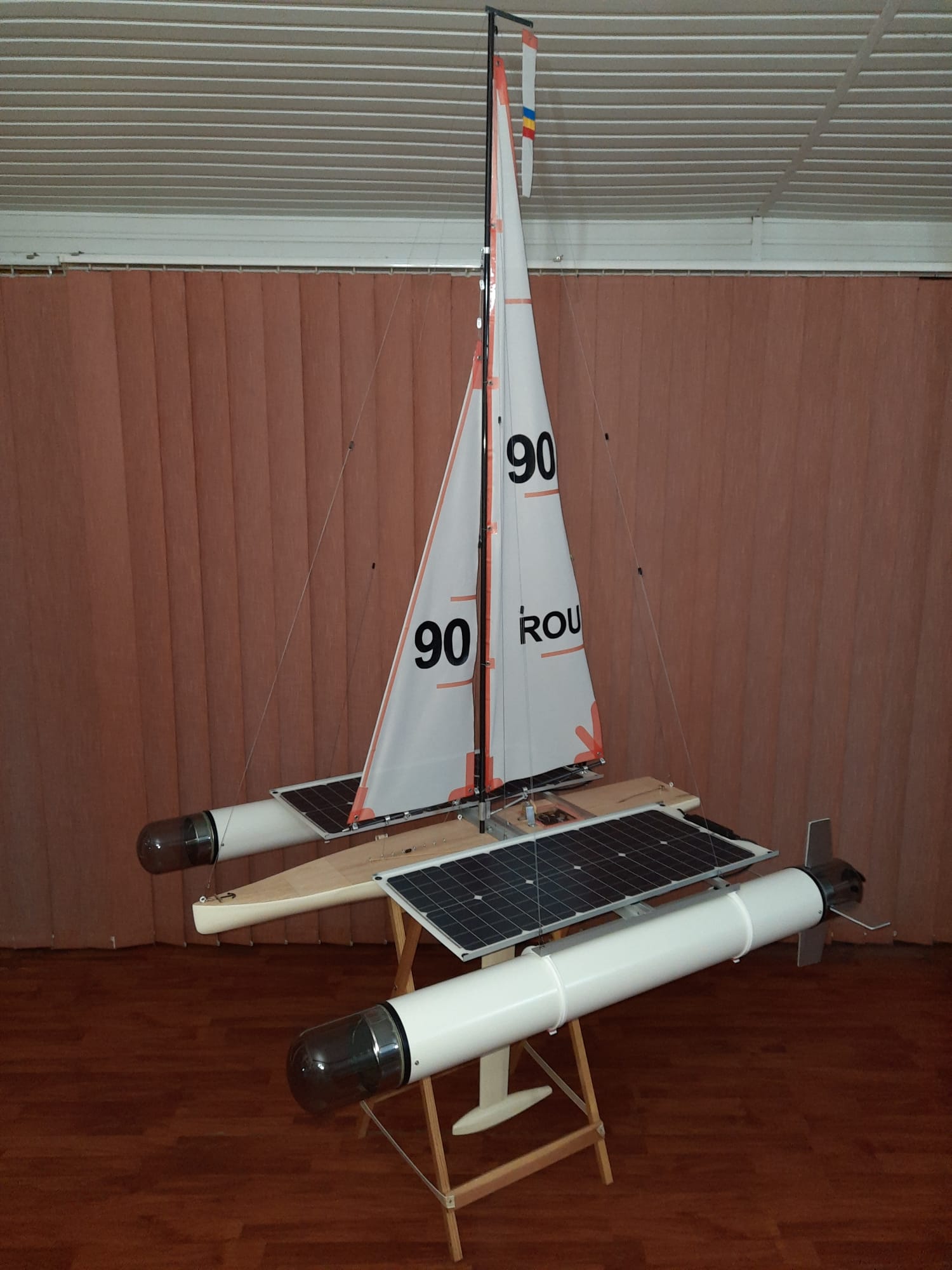
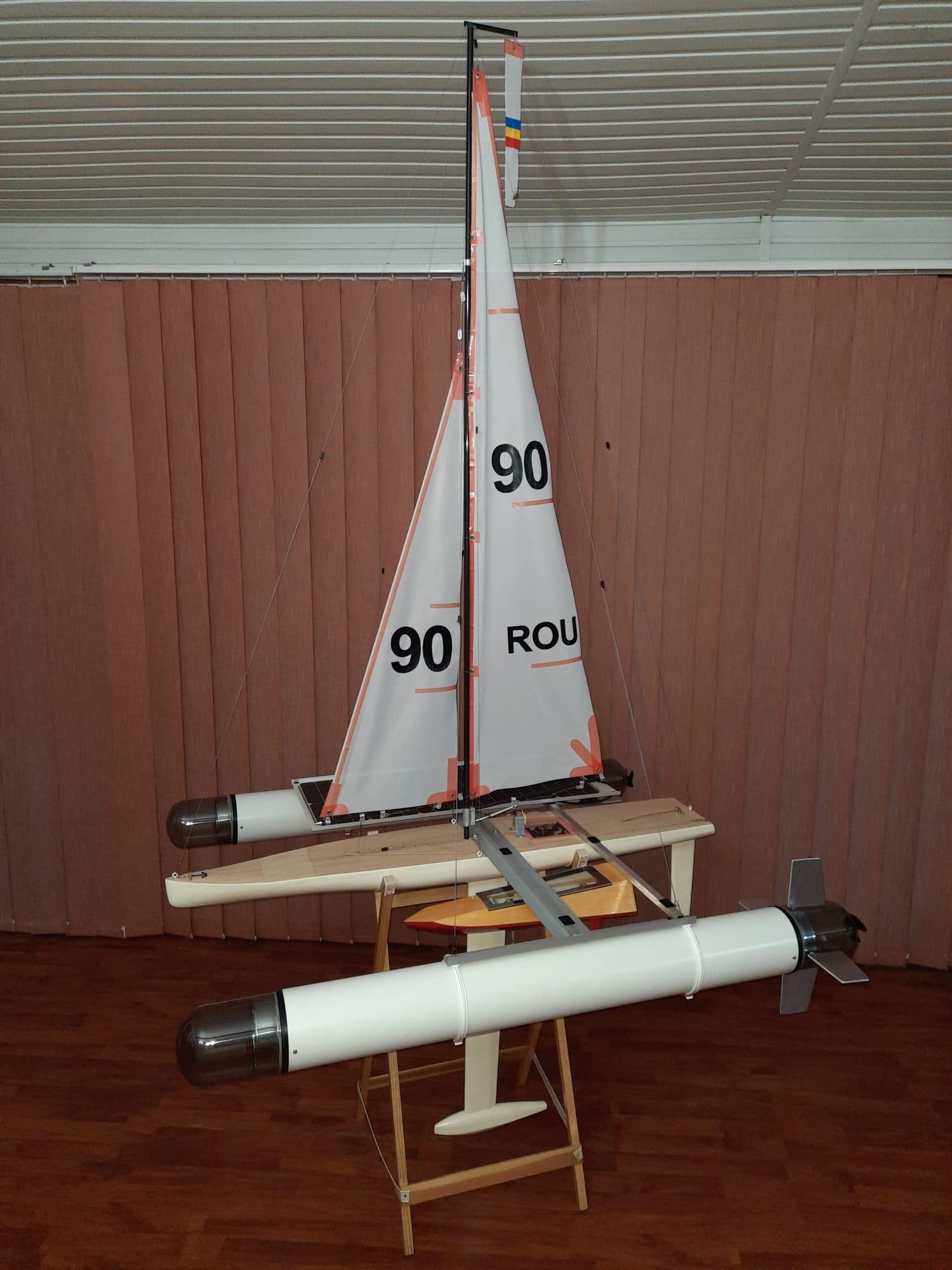
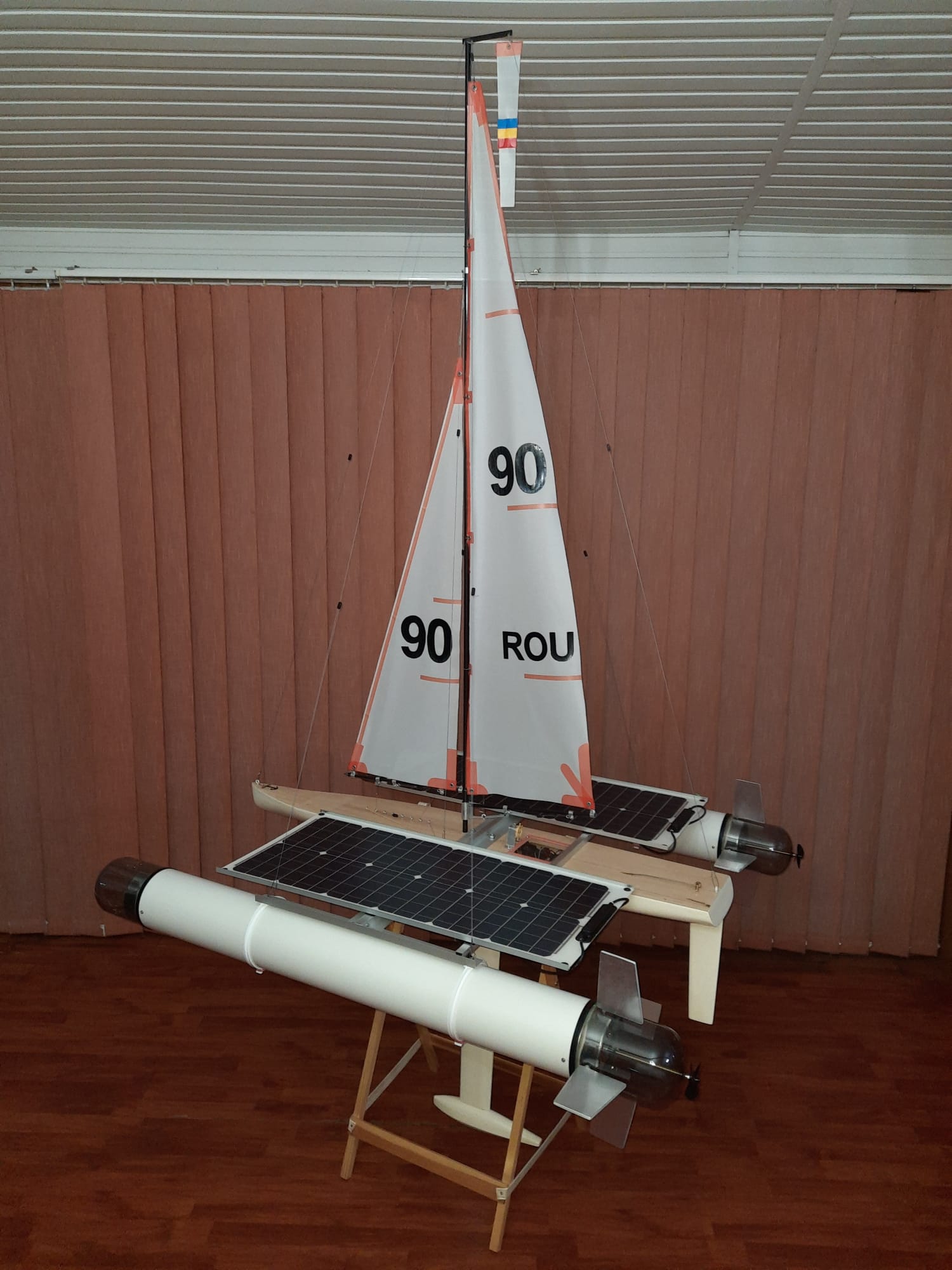
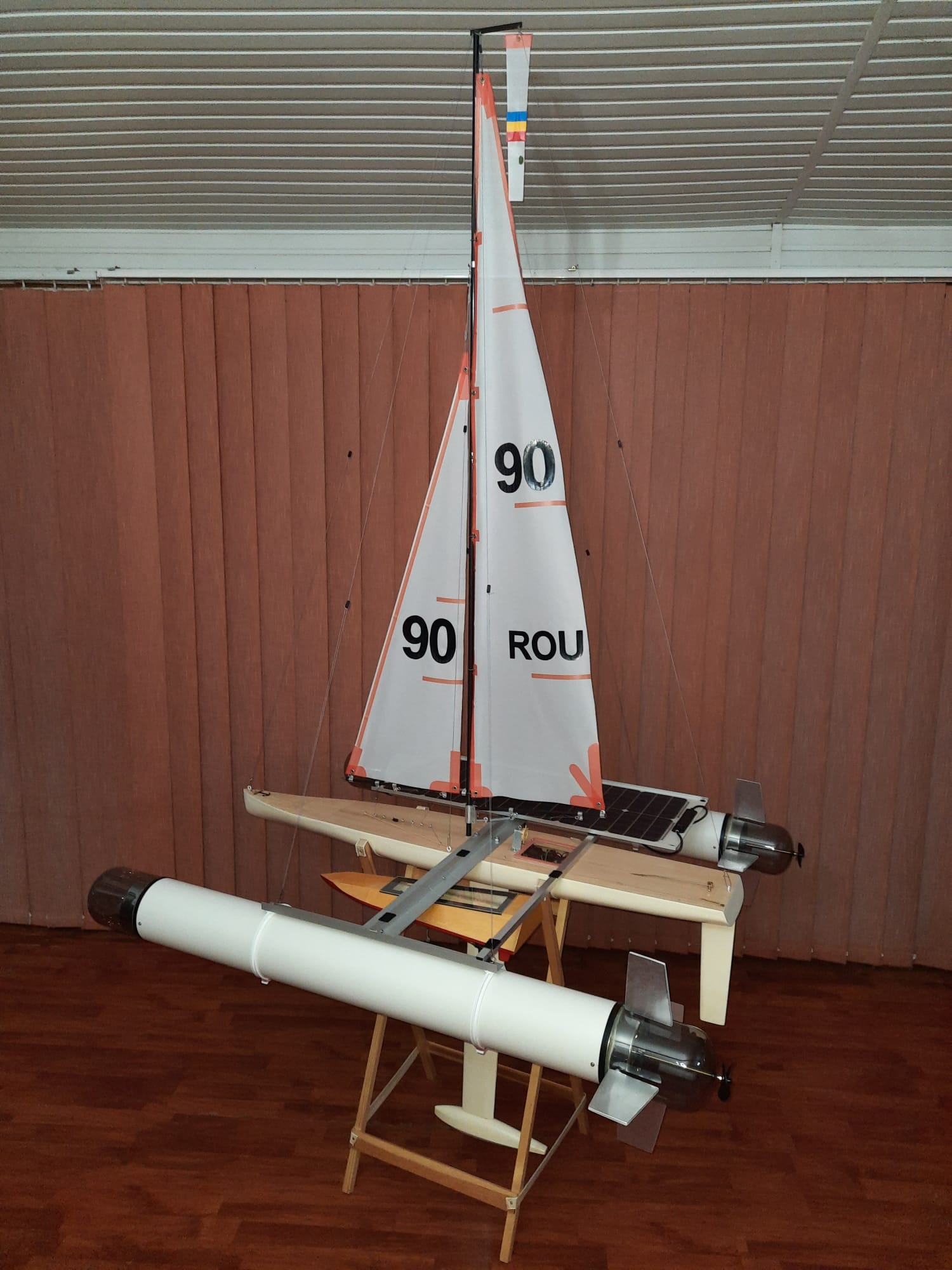
Modular Sailing Drone Carrying Underwater Drones and USV Minidrones
The sailing drone carries out 24/7 missions by using wind power for propulsion and solar energy for its control systems and for charging the batteries of the underwater drones and USV minidrones, simultaneously covering the water surface and underwater environment. Silent, fast and radar-invisible, equipped with microphones, active-passive sonar and sensors, processing data with AI, it can detect enemy naval and underwater drones and destroy them through kamikaze attacks using its UUV drones and USV minidrones. After completing its combat mission, it can carry out reconnaissance and surveillance missions and then return to base to be loaded with new UUV drones and USV minidrones.
FEATURES
- Dimensions 1.3 x 1 m, own weight 5 kg, range 80 km, built from fibreglass and carbon fibre with mylar sails controlled by a winch servo
- The underwater drones and USV minidrones are mounted on a crossbeam with decoupling servomechanisms and independent remote control systems
- The underwater drones are remotely controlled by satellite to the sailing drone and underwater via fibre optic; at shallow depths they are controlled by radio, with the receiver antenna positioned on a mast alongside the video camera
- Two photovoltaic panels mounted on the same crossbeam, charging the batteries of the UUV drones and USV minidrones
- Fully demountable, can be transported and operated by one person
- Functions as a trimaran with a bulb keel, providing excellent stability
- In case of no wind, sailing upwind, or to achieve higher speed, the motors of the underwater drones can be used
- Dual military and civilian use: search-rescue, security, inspection, environment
- The 5-metre variant has even more capabilities, with a virtually unlimited range via remote satellite control and a payload capacity of 300 kg, with the possibility of mounting more UUV and USV drones for kamikaze missions
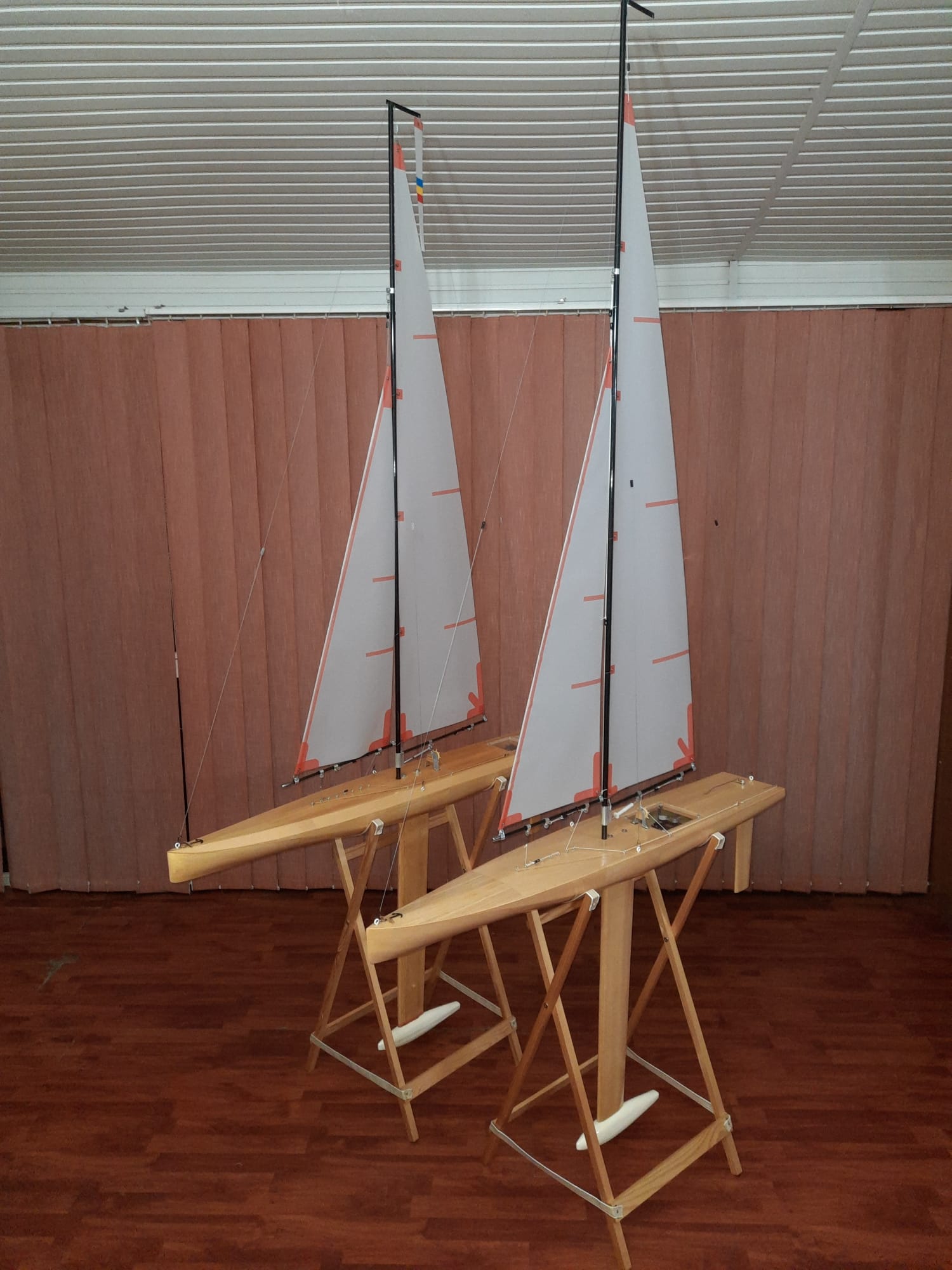
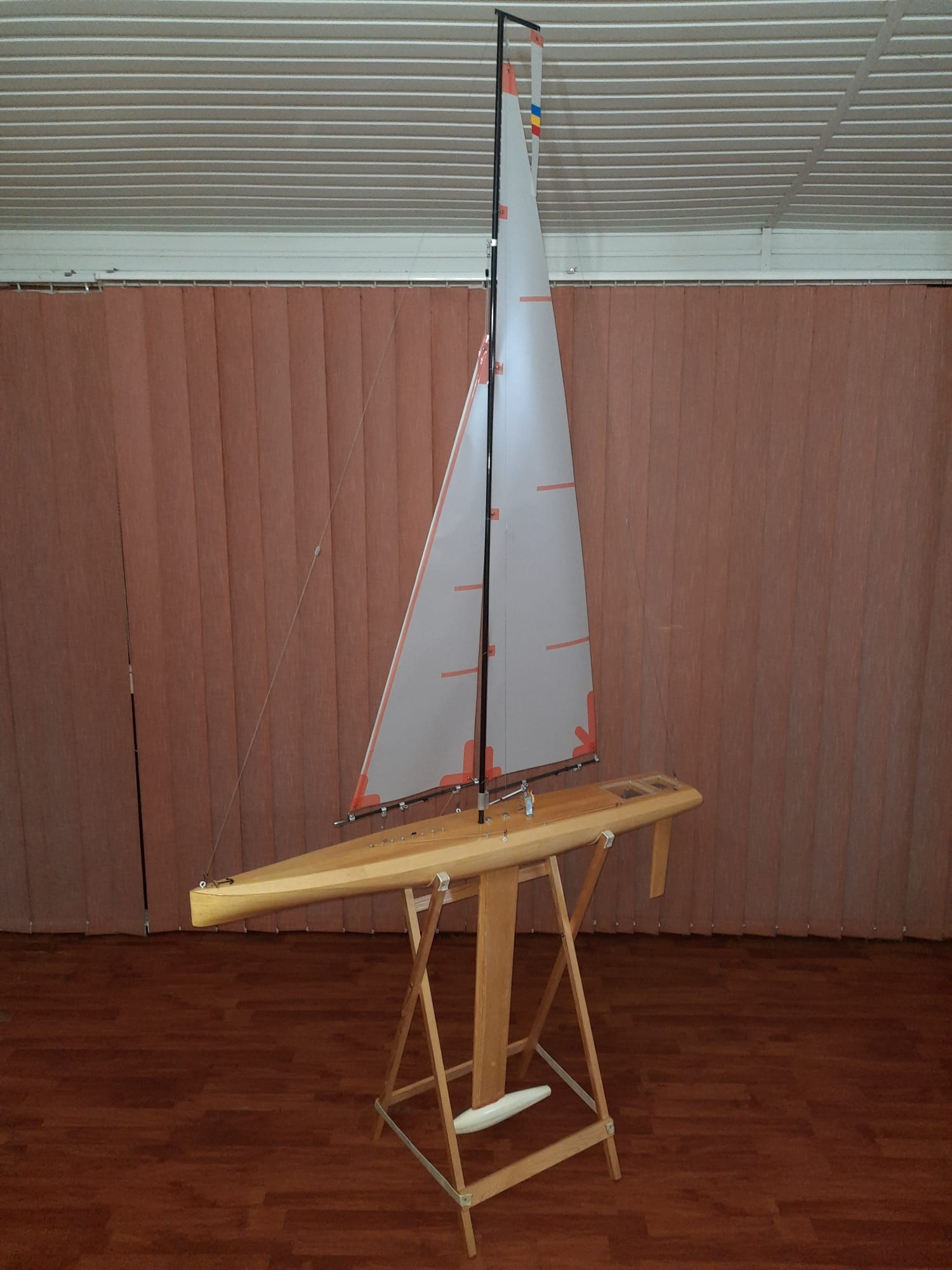
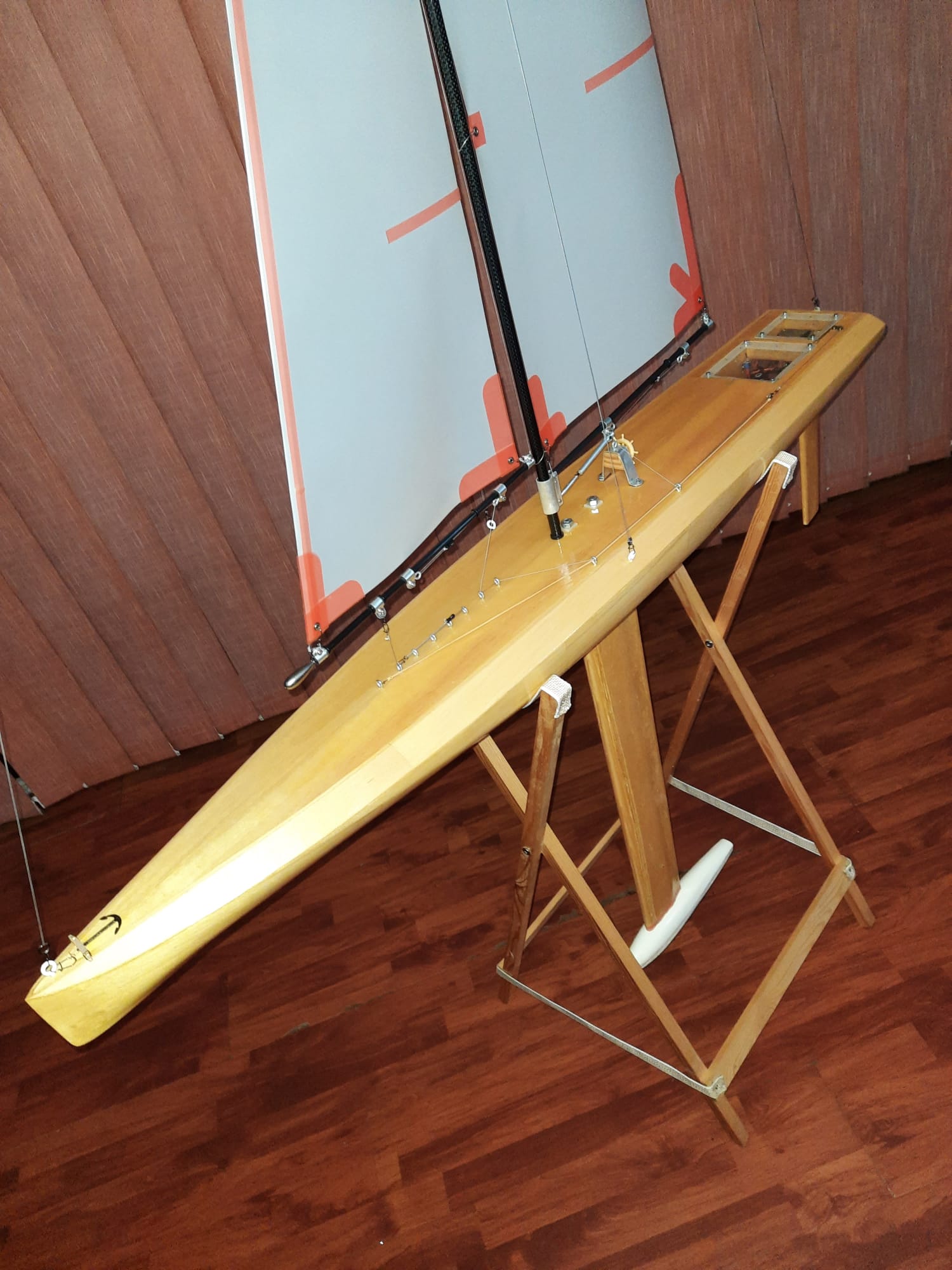
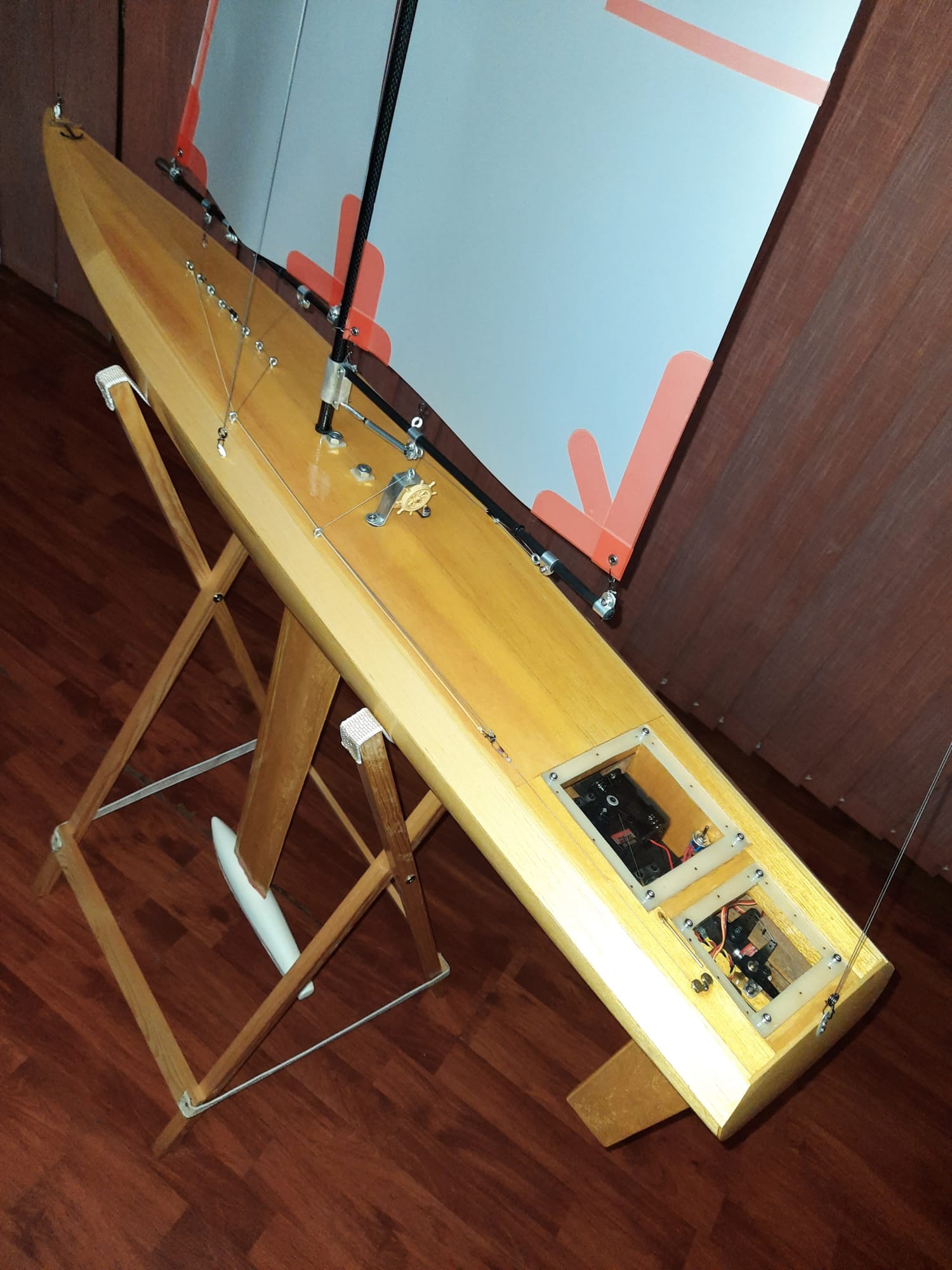
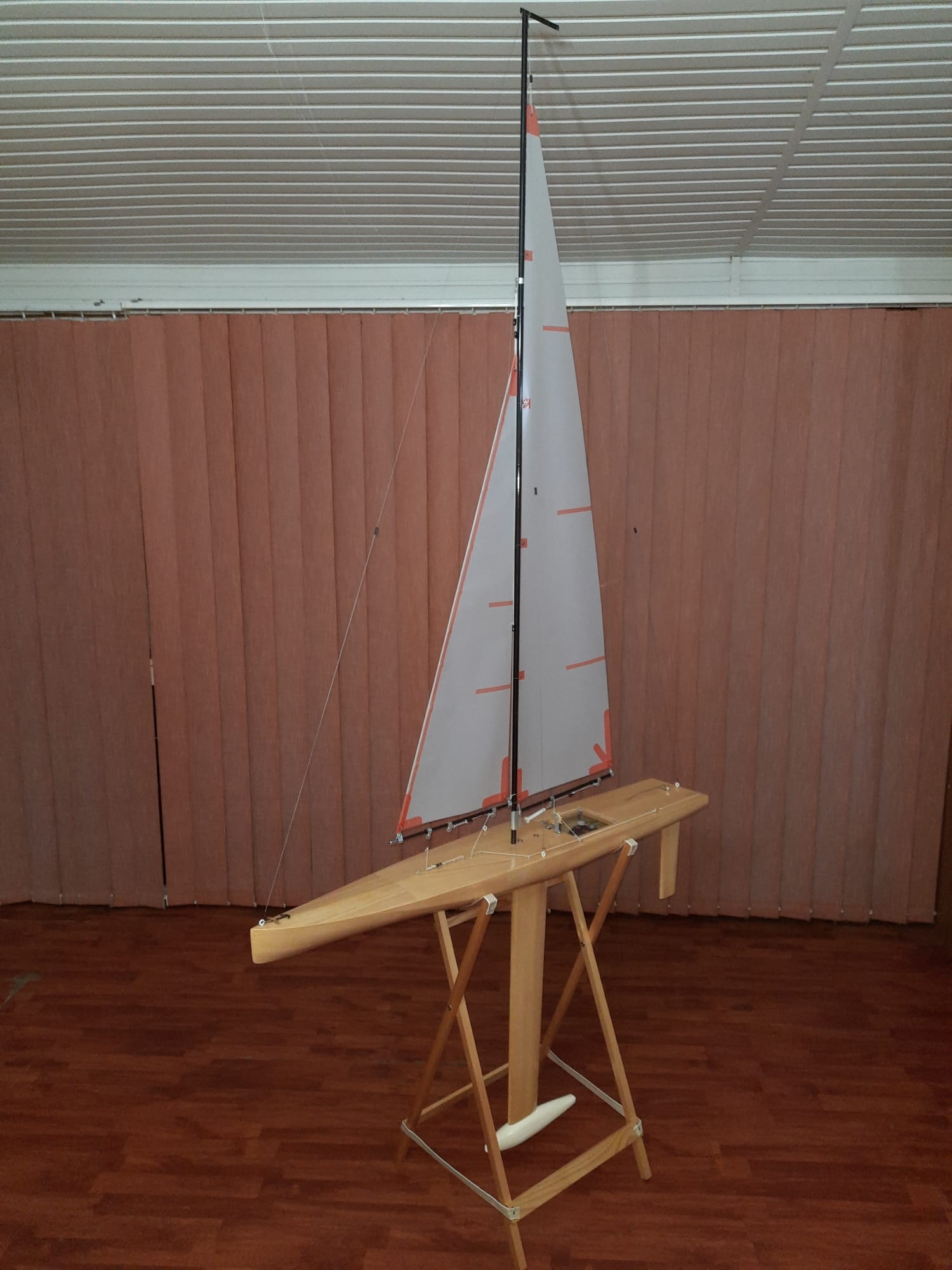
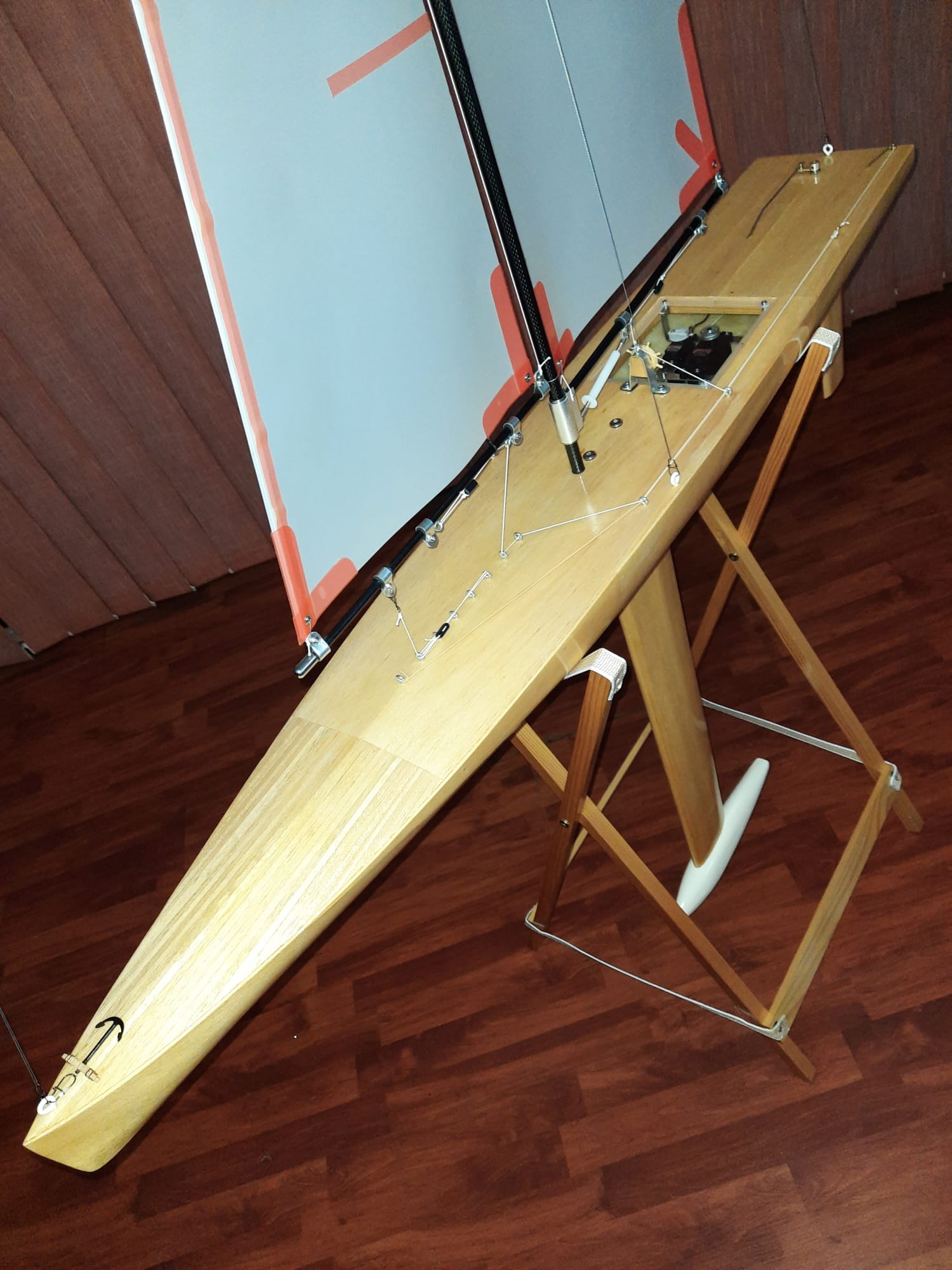
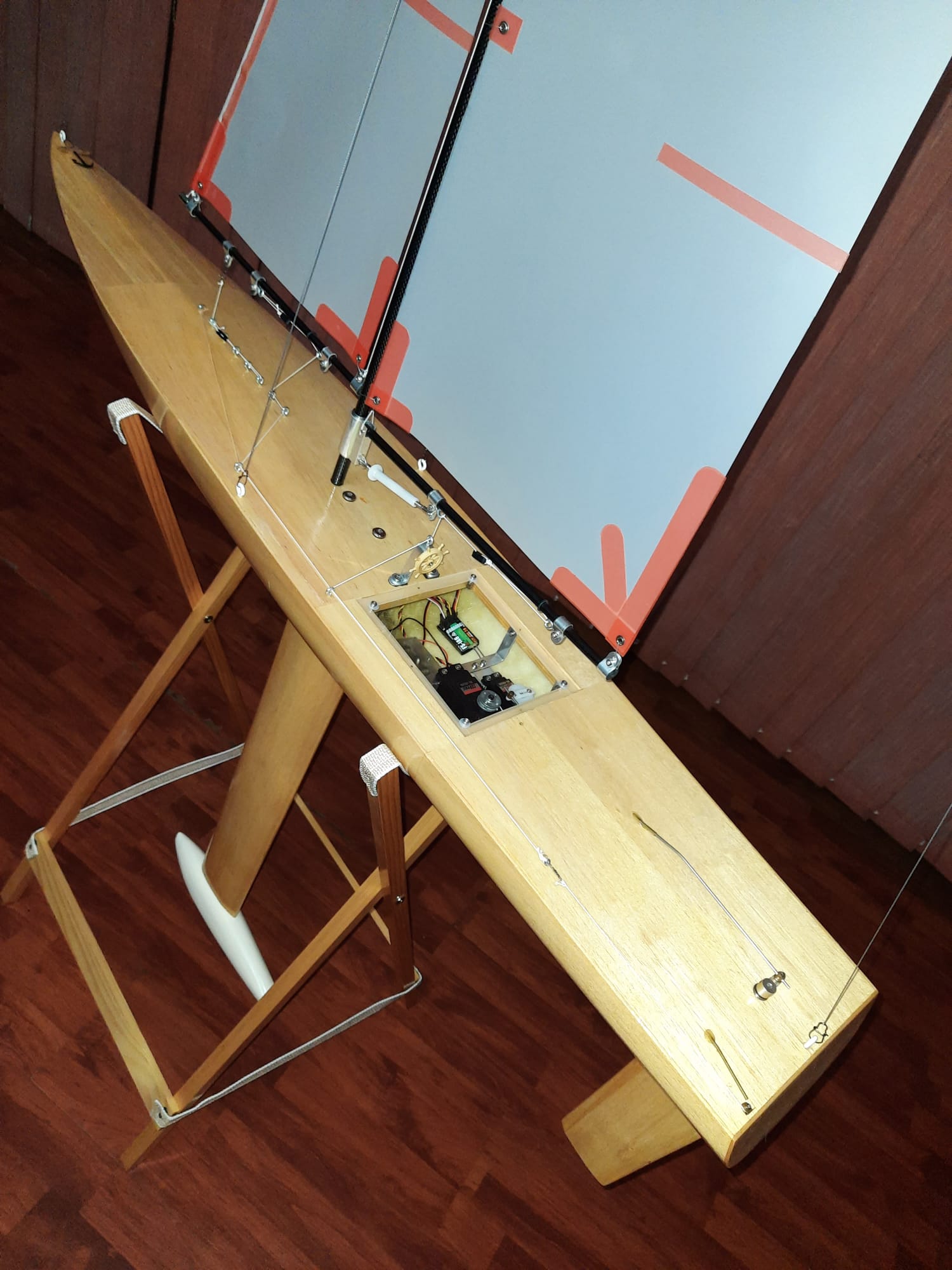
Sailing Drone
Variant without underwater drones and USV minidrones, dedicated exclusively to 24/7 reconnaissance, surveillance and control missions, transmitting 4K images in real time at 60 fps, data from sensors, microphones and active/passive sonar, all processed by AI for the detection and marking of enemy naval and underwater drones. Dual military and civilian applications: search-rescue, security, inspection, environment.
FEATURES
- Dimensions 1.3 x 1.7 x 0.22 m, own weight 5 kg, range 80 km, built from composite fibreglass and carbon fibre with mylar sails controlled by a winch servo
- Fitted with a bulb keel that ensures the drone's stability
- Fully demountable, can be transported and operated by one person
- Silent, fast and radar-invisible
- Hydrodynamic hull with concave bow for low forward resistance
- Can be used by the Border Police and Coast Guard to combat illegal border crossings and drug and human trafficking
- The 5-metre variant has even more capabilities with a virtually unlimited range via remote satellite control
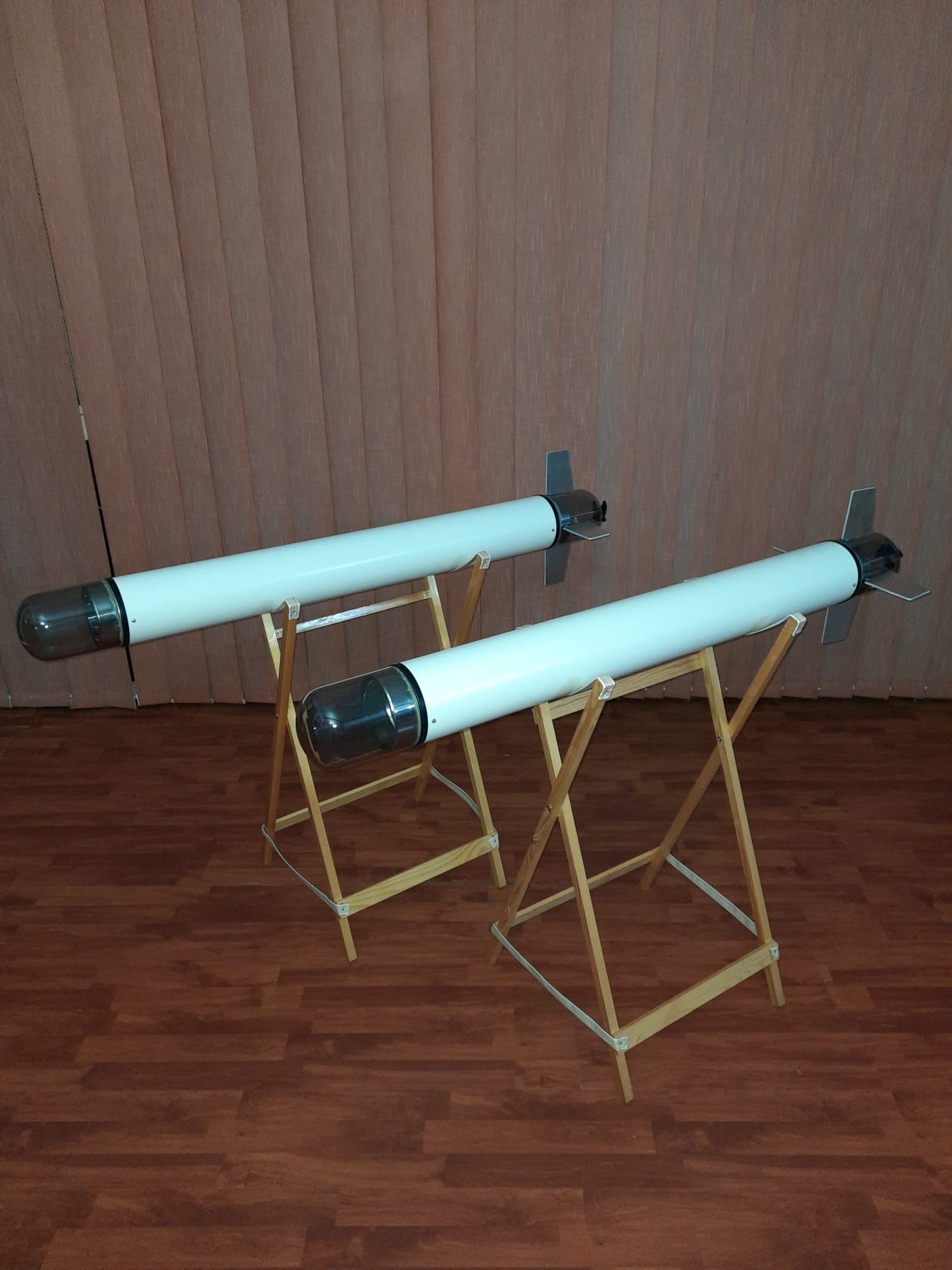
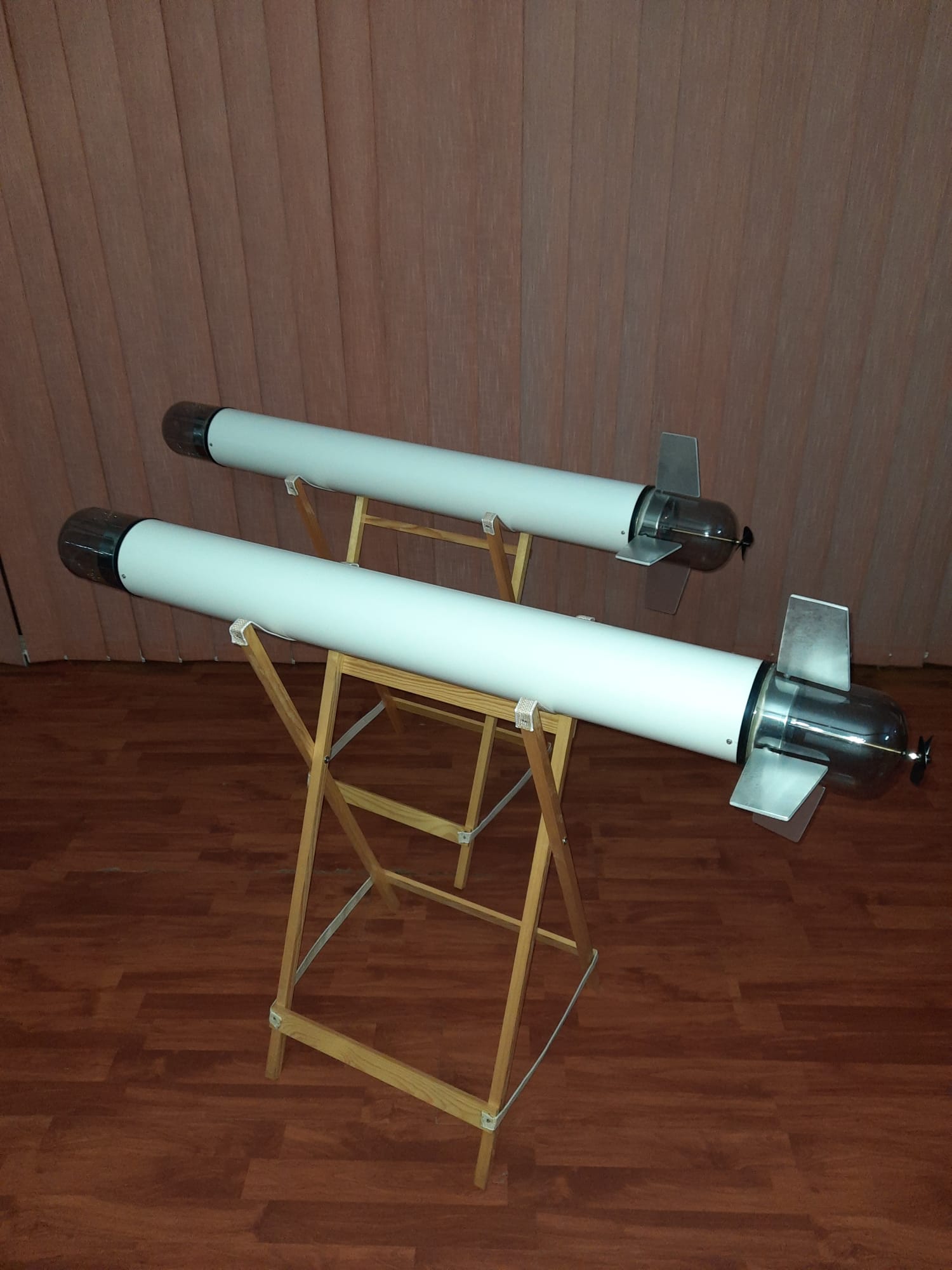
UUV Underwater Drone
They are mounted with decoupling servomechanisms between the three hulls of the trimaran maritime drone or on a crossbeam on the lateral sides of the sailing drone. They have independent remote control systems, separate from those of the sailing drone or maritime drone. The UUV drone batteries are charged via a controller connected to solar panels. Upon detection of enemy naval drones, the underwater drones detach from the sailing drone or maritime drone, submerge and operate as torpedoes, guided remotely until they reach and destroy their targets. They are equipped with electric propulsion systems, GNSS navigation systems and real-time 4K video transmission, enabling targeting and tracking of enemy drones until neutralised by remote detonation of the explosive charge.
FEATURES
- Dimensions 130 x 13 cm, speed 60 km/h, carries 5 kg payload
- AI data processing for detection of vessels, naval and underwater drones
- Built from composite fibreglass and carbon fibre materials
- Silent, fast and invisible to radar and sonar
- At shallow depths controlled by radio, with video camera and GNSS antenna mounted on a mast; at greater depths controlled by radio to the deck of the maritime drone or sailing drone and beyond underwater via fibre optic
- Operation in all adverse weather conditions
- Dual military and civilian use: search-rescue, security, inspection, environment
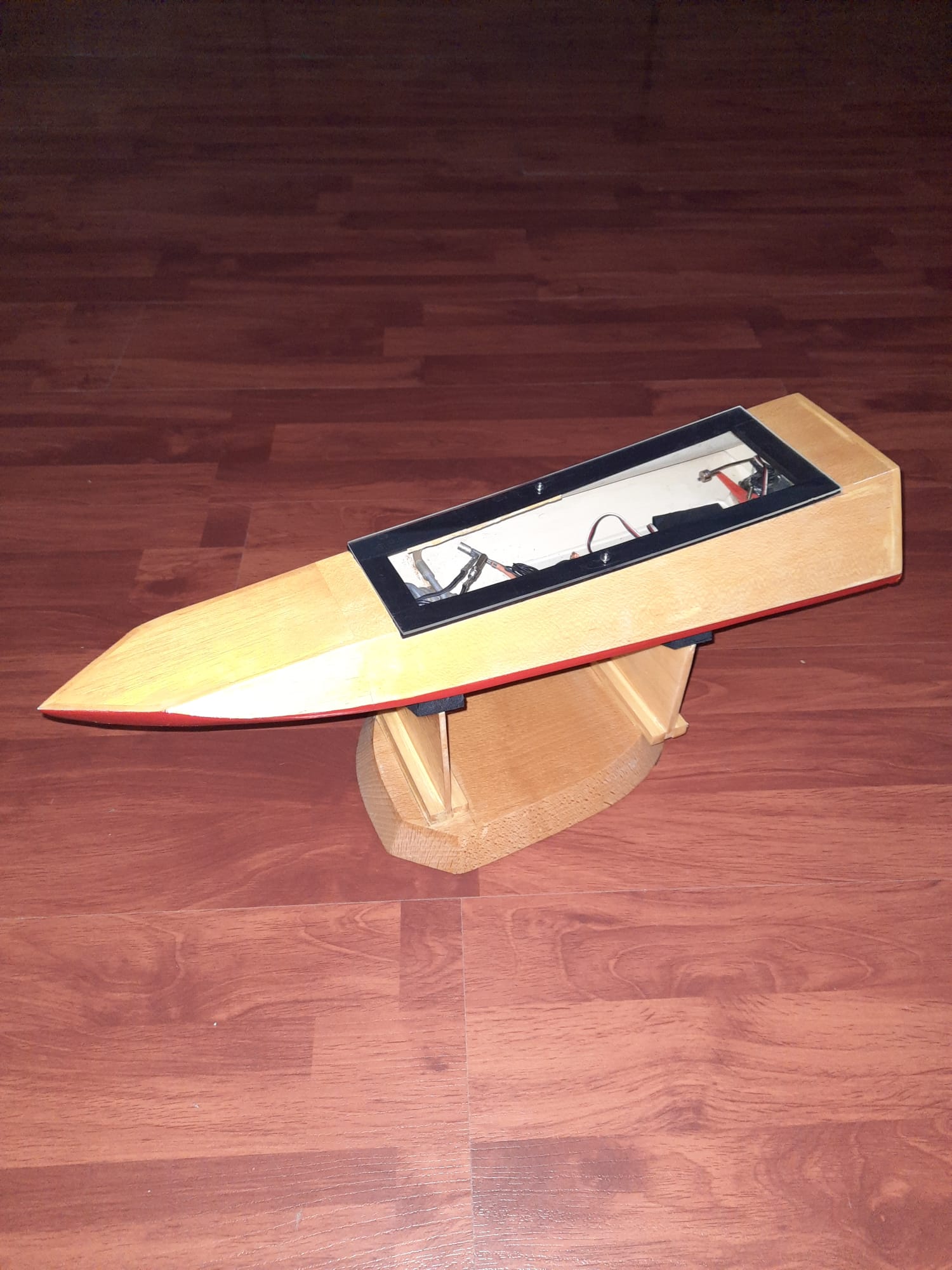
USV Minidrone
Drones of 50–100 cm, weighing 1–3 kg, capable of carrying 1–5 kg of explosives, with a range of 80 km, designed for rivers, streams and lakes, manoeuvred and piloted by one person, making them suitable for special operations forces being trained to assemble and control naval drones. Very affordable and useful for reconnaissance and surveillance missions, as well as kamikaze missions to destroy enemy naval drones and small craft.
FEATURES
- 4K video camera with 3-axis EIS gimbal and real-time 60 fps streaming
- GNSS navigation system
- Silent, fast and radar-invisible
- Speed of 60 km/h
- Built from composite fibreglass and carbon fibre materials
- Can identify and mark the target from water level and transmit the location to the Command Centre
- AI data processing for detection of vessels and drones
- Can be used by the Border Police and Coast Guard to combat illegal border crossings and drug and human trafficking
- Dual military and civilian use: search-rescue, security, inspection, environment
Patent application
Integrated Autonomous System of Interconnected Drone Networks for Maritime and Fluvial Border Security
Invention registered with OSIM under patent application no. A/00424 dated 29.09.2025, published in the Official Industrial Property Bulletin – Inventions Section No. 3 of 30 March 2026.
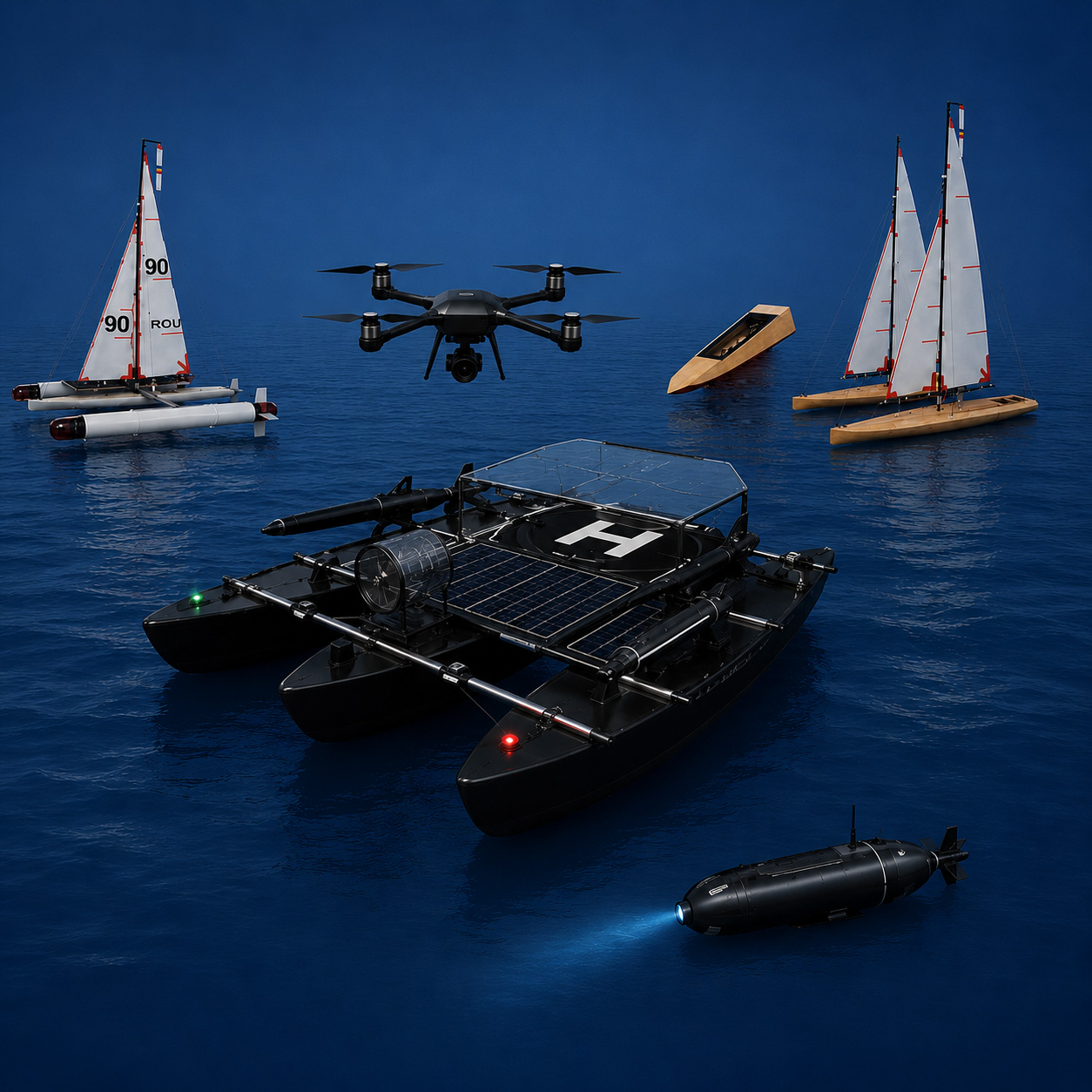
The system — incorporating maritime drones and sailing drones — enables the construction of a "drone wall": a complex network of surveillance drones, sensors, satellite links and anti-drone systems along NATO's eastern flank, covering 31.7 km of maritime border and 343.9 km of river border with Ukraine. Deployed in the areas of Constanta port, the Neptun Deep project platform, the Danube Delta and the Danube river, it simultaneously covers marine, aerial and underwater environments. It is designed for 24/7 reconnaissance, surveillance and control operations, day and night, using thermal and infrared cameras streaming 4K footage in real time, active and passive sonars, GNSS navigation, and AI-powered data processing to detect movement of vessels, aircraft, drones, vehicles and people — alerting security personnel at the command centre and enabling interception and destruction of hostile maritime, aerial and underwater drones. It has dual-use applications in military missions, border police and coast guard security operations, as well as search and rescue missions.
Autonomy and low cost
The maritime and fluvial border is secured at very low cost with minimal human personnel, being fully energy-autonomous.
Arsenal on-site
By deploying modular photovoltaic maritime drones carrying aerial drones, anti-drone missiles and underwater drones, the full arsenal for destroying hostile drones is on-site, enabling rapid response without endangering human personnel.
Border interception
Hostile maritime, aerial and underwater drones can be identified, intercepted and destroyed precisely at the moment of entering national territory, preventing loss of life and destruction of civilian and military targets.
No air or naval forces required
There is no longer any need to deploy air and naval forces — including F-16 fighter jets, military frigates and defence personnel.
Contact information
Founder · Inventor · CEO
Contact details, patents and professional background of the founder of S.C. MaritimeXDrone Innovation S.R.L.
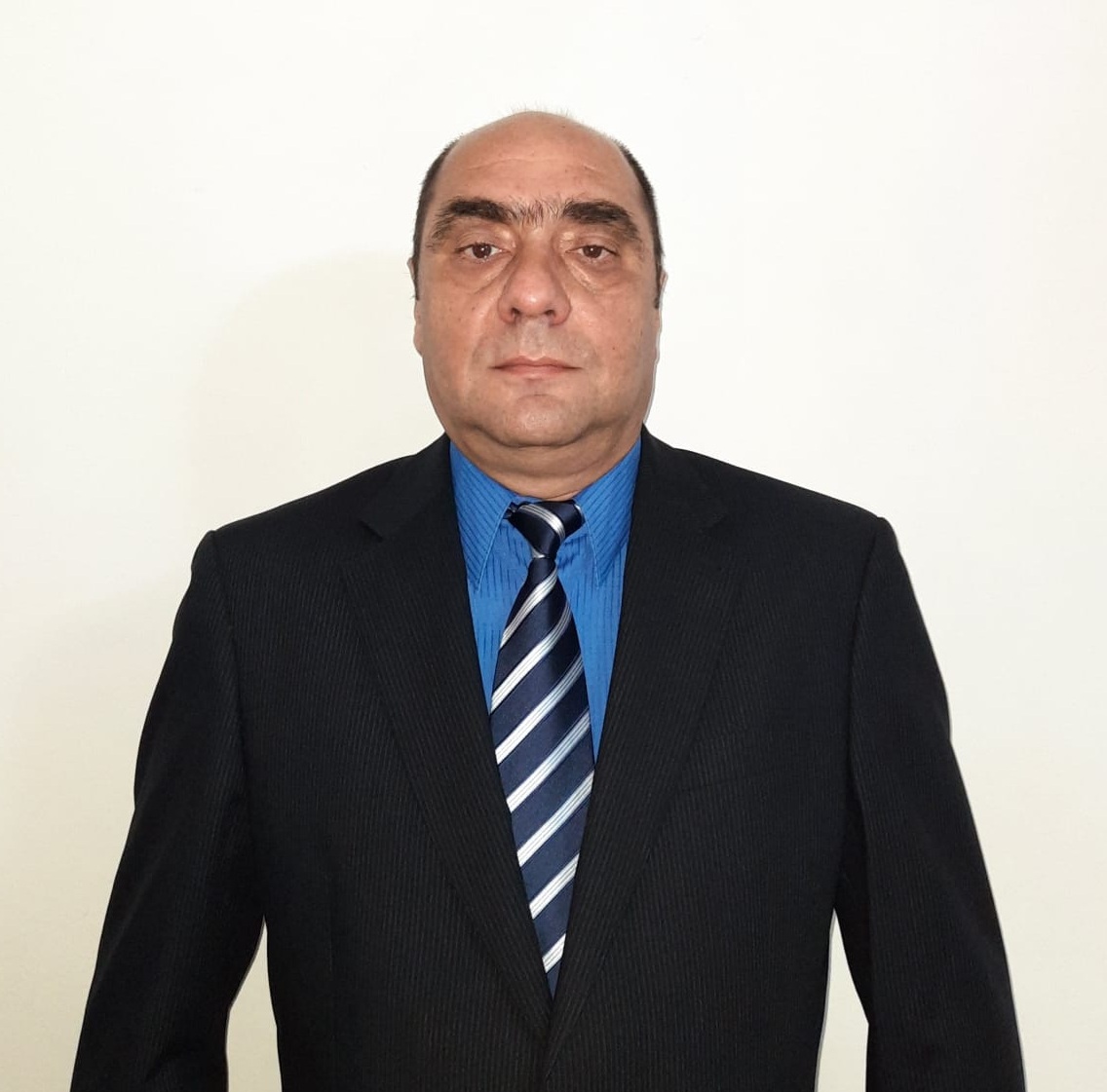
drd. ing. CHITU VIOREL GABRIEL
CEO · Founder inventor S.C. MARITIMEXDRONE INNOVATION S.R.L.
Reserve officer, inventor and developer of maritime drone design and construction
55 ani, București, România
- S.C. MaritimeXDrone Innovation S.R.L.
- Sediu: Str. Soseaua Unirii nr. 419, Com. Corbeanca,
Jud. Ilfov, Romania, cod postal 077065 - E-mail: office@maritimedrone.ro
- EUID: ROONRC.J2026049197004
- CUI: 55404685
Patents registered with OSIM
- MODULAR PHOTOVOLTAIC MARITIME DRONE CARRYING AERIAL DRONES, ANTI-DRONE MISSILES AND UNDERWATER DRONES — patent application no. A/00248 of 16.06.2025, published in BOPI – Inventions Section No. 11 of 28 November 2025.
Go to Espacenet — Patent [RO139230A0] → - AUTONOMOUS INTEGRATED SYSTEM OF INTERCONNECTED DRONE NETWORKS FOR SECURING MARITIME AND RIVER BORDERS — patent application no. A/00424 of 29.09.2025, published in BOPI – Inventions Section No. 3 of 30 March 2026.
Go to Espacenet — Patent [RO139456A0] → - MODULAR SAILING DRONE CARRYING UNDERWATER DRONES AND USV MINI-DRONES — patent application no. A/00076 of 16.02.2026, to be published in BOPI – Inventions Section No. 8 of 28 August 2026.
Professional background
- S.C. MaritimeXDrone Innovation S.R.L. – founder, inventor, CEO
- S.C. Softech International S.R.L. – founder of a Romanian-German company – director
- Ministry of Internal Affairs – General Directorate for Computerised Records of Persons – IT Directorate and Control Service – IT specialist officer
- Ministry of Internal Affairs – General Directorate of Border Police, Foreigners, Migration and Passports – Bureau Chief – Computing Centre – systems engineer – IT specialist officer
- National Bank of Romania S.M.B. – Payments and Settlements Department
- Hydraulic Research Institute – Computing Centre
Credentials
- Doctoral thesis: Optimisation of local computerised information networks – PhD candidate in Management and Industrial Engineering – Faculty of Power Engineering – Politehnica University of Bucharest
- Completion certificate HP-UX System and Network Administration – Hewlett Packard
- School of Postgraduate Academic Management Studies – Strategic Management – Politehnica University of Bucharest
- Engineering degree – Faculty of Mechanical Engineering – Politehnica University of Bucharest
- Mathematics-Physics High School No.1 Informatics, Tudor Vianu, Bucharest
- Licensed since 1983 at the Technical Applied Sports Club CSTA Bucharest – Ship Modelling
- Participation in Windows Network Administration courses and seminars - Microsoft Developer Days organised by Microsoft Romania, and Unix and Sinix courses organised by Hewlett Packard and Siemens
- System administrator of the largest databases in Romania
- Collaboration with EADS Deutschland, Siemens Nixdorf and Fujitsu Siemens Computers on the project “Integrated System for Securing the State Border” for Romania’s accession to the Schengen Area, and with U.N.H.C.R. for the design and implementation of the IT system of the National Office for Refugees
- The Director of the Romanian Intelligence Service formally requested my transfer in writing, after I had passed all tests and checks over the course of a year, but the Ministry of Internal Affairs did not agree, on the grounds that I was a well-trained and highly skilled systems engineer
- Military service completed – counter-terrorism